If you’re experiencing yourself as a lonely individual right now don’t read this whole thing yet. First go outside, touch a tree talk with an old person and a child and a bird eat something made for you by another move, rest, repeat until you feel community in your hands and feet and belly again. Which means you’ll take only what you need from here and leave the rest of it alone for another wanderer who may need it.
(Got it? Great. Ok, I think we’re ready.)
Welcome friend, how are you today? Here is my whole resume. I learned that grief is a sanctuary from my Mom Linda whose presence has held me through every tear I’ve shed on this earth & who has lived with Alzheimer’s disease since she was 55. She’s turning 77 next month & officially becoming a medical marvel.
At mid stage I wrote a lot of poetry about her, and us as the disease quietly shredded us, ripping us open, scattering our friends to the wind. And loudly exploding our extended family apart. I became shrapnel—more open & scattered than I ever volunteered to be. Embedded in others. Bloody. Ten years ago I wrote this:
I break my heart each morning so there is room for her
her memory and story her history inside of me
disease that slowly separates her away from her
beyond disease a slow release of precious self to daughters.
Mom we break ourselves each morning let our hearts be wounds now find those hearts a gentle gauze wound around the world.
Yes, that was my whole resume so that when I say grief is a sanctuary I can trust that I actually know something real though my culture taught me not to trust myself and also my ears are white— apparently the smallest ears for listening in the entire animal kingdom of earth. And so you’ll know that I am a gentle being, from a long line of gentle beings, who can also feel like shrapnel across and into human flesh.
Grief creates silence, full presence & living beings who can crumble and re-form fluidly repeatedly
Grief invites tenderness, vulnerability, space, time first within me, then in the full view of, and finally in the full presence of my worst enemies.
Have you cried with someone who terrifies you?
Have you been comforted by hands stained with the blood of your people and being?
Have you stood at the river now terrified because you have no enemies left? No voices but your own to contend with. Who, then, is left to blame?
Grief connects me with moss & soil rivers, oceans, bones, darkness, stars, ash, and women. So. Many. Many. Women.
Grief brings forth—
visions and intuitions
Have you seen the sky crack open to hold all the grief
when you just couldn’t hold it all anymore?
Heard trees tell jokes? Received better counseling from a stray dog than every PhD you know? (sorry friends)
sensitivity
Have you dropped to your knees crying feeling the caged & hidden pain of a passing stranger?
Gladly waited to hear a more-whole story?
Hidden among trees when people are too much?
guilt-free, shame-free, truly free laughter
Have you witnessed people laughing together at the threshold of death?
In her presence? Seen surprise in eyes that thought they’d only ever want to cry?
Laughed with a woman who cannot laugh out loud anymore? Felt it from within?
complete peace and rage with what is
Have others been deeply happy that they are not you?
Have others called you fearless? Been wrong? Seen far more than you could see? Have you witnessed the genocide of friends? Funded by the guy you thought was the good guy?
wise and playful elders, of all ages, everywhere
Have you followed the 9-year-old Palestinian girl who is a genocide press correspondent in Gaza? Her name is Lama Jamous. Be careful. In an instant she can teach you everything you could ever want to know about how fearless you are.
Are you ready? Are we ever?
humility, unlearning, change
Grief welcomes everyone, without trying.
I can’t welcome everyone. I’ve tried. I’m so fucking done.
The best I can do is hold you close for a moment and wish you well, in love, as we part company.
sanctuary
I wrote this 10 years ago too:
respite is not a thing we are given respite is who we are right now bowing to the moment together
respite is who we’re becoming allowing our true selves to be
That me was becoming respite for myself and my family—at least the ones who remained. Hello me. And this is us becoming sanctuary now…
We’re holding far more grief than we were holding back then. Have you noticed how the sky herself helps all of us now? The soil? Or how soft the moss is? Seen kites rising everywhere as bombs fall and the barbed wire spreads? Felt the lack of refuge or respite for you and the other refugees among all powerful men? Carried all your worldly possessions in a frail plastic bag and dared to dream the same dreams as those who are currently starving?
We have. We have. You are here with us now, and in this place, we are held only by that. Just by where we are, who we’re with, and what we’re feeling together. Undone. Between selves again. Angry. Frightened. Older. Full of laughter. A brand-new being.
We are sanctuary. We are sanctuary. We are every moment unwelcome feels welcome. Every space between. Every place held together by the falling apart. Every old and new language emerging, a voice shaking off old violences. Sanctuary is where carnivals and other new traditions come to be born. We are a place, not a person, most days. And maybe we are a person some days too. How the hell am I supposed to know? I’m new here too. And no one here is fully ready for what we have to do next together. No one. And we never will be. Here we know that and we own that. Only that. We. Can be, and do, that!
Wow. How cool is that?! I mean this. I mean. How remarkably wonderful are we?!!
D & I were walking Cora and Eva in a grassy field at the edge of the woods this morning. We like to make Cora run back and forth between us as we walk, because she is very young and we are very not, and this way she runs 10 times the distance we walk with Eva. But today as she was running Cora saw a bunny, and she chased it into the woods. Not really something to be concerned about for us, in hindsight, because she doesn’t kill bunnies, she just herds them, and she never runs far, because she also herds us. But…
As I watched her fluffy butt disappear into the dark forest, and yelled out for her to stop chasing the rabbit, at that same moment I stepped into a hole that was hidden by tall grass. My right ankle started to slip and twist, I overcompensated, and ended up somehow twisting my left foot far worse than the right one as I fell to the fortunately soft ground and landed on my fortunately well-padded butt. I had to sit there for 20 minutes to assess the damage and pain and see if I could walk back out of the woods to the car. I could. My right ankle was a little sore but ok. My left ankle was a lot sore but ok enough to get me to the car.
So, back when I was full-time writer, over the years I learned to not freak out too badly when bad things happening to me, because I came to understand that they’d be great stories later. This is how we connect–not just in our joy but in our pain. In our falling down. But I’ve got to say, today, it’s even more fun being an herbalist than a writer, because before we even made it home–as my left ankle was swelling up in the car ride home–I was thinking about all the plants at home, and which ones would help, and what form they might best help in. I was actually having fun plotting my own path to healing–while still in pain.
So one point, maybe, is that writers are weird, and herbalists are weirder. Or maybe this has nothing to do with what I do for a living and everything to do with what we all learn as we get older and become old hats at falling down. Another point, though, for me, is that I’ve learned that we give up something valuable beyond words when we put every health choice into the hands of pharmacists, prescription drug makers, and doctors. I love my doctor (nurse practitioner, actually). Will call her in a second if I can’t heal myself. Trust the scientists in my life too–good, deeply nerdy, introverts, all. And. I love trusting the plants here, and myself, and my herbalist community, too. I love how willing and able to help us the plants and trees and most humans–in all directions around us–truly are.
Eight hours have passed, and both my ankles feel so much better now. I started pampering the left one so much that it told me to switch and pamper the right one. I elevated them in turn, and iced them. Rubbed a created-in-the-moment blend of my comfrey, lavender, calendula, and rosemary infused oils into them. Drank comfrey tea with local honey. Ate vegetable soup with extra nourishing herbs. Later, I rubbed a little willow oil into them too as an experiment–I’m new to willow and just started making willow-infused oil last week when the county decided to cut our neighbor’s willow tree away from some power lines. Go willow! Then, I elevated and iced my ankles again. Wearing socks that are a bit compressiony now and that smell amazing because of the infused oils. Decided against using the cottonwood bud oil because I’m mostly better now, and I need that precious, powerful oil for my products this winter! This was all done out of intuition and instinct. Not my own. (My own instinct was to try to single-handedly save every small bakery on Whidbey during the pandemic by trying to eat all the pastries myself.) No, this is the intuition and instinct of the field, the forest, the herbs, the plants, and all the earthlings we’ve welcomed into our world here. All those who welcome us too.
I’m not 100% yet. Will keep the ankles elevated tonight and likely tomorrow too. Grateful for laptops that allow me to work on the couch with my feet up. And, wow, folks. Plants and trees, and fields and forests, are so very, very cool. Why did our ancestors ever let these powerful and healing relationships go? It occurs to me that many of them didn’t. Many held on even as they were killed and tortured and mocked and litigated for hearing tree wisdom and honoring plant friends and sharing that wisdom with others. The relationships are still there. The wisdom remains, although it can feel hidden. But I did let go at some point. And now that I’ve returned to the forests and fields, I can’t imagine ever going back.
Herbalists sing songs honoring the wisdom of grandmothers. One of my favorites has a line that says “Stand in your power, woman. Stand in your power. Listen, listen. Listen, listen.” My own power is in the fields and in the forest and in wild and untidy gardens, with honest, kind, and untidy people. And in the relationships among every being that lives and moves within the forests and fields here. These are good questions to revisit, because some answers change with time and some don’t. And it’s too easy these days to feel like we have no power. Where is my power now? And where, my friend, is yours? Great question, field and forest, bunny and fluffy dog butt. Thank you for asking.
38Cassie Firnstahl, Amy Jo McMullin Kasten and 36 others22 Comments2 Shares
Our flags always fly at half-mast now. Wide and unhealed wounds on high for the world to see flap dripping loss and pus rains down into the public square.
Below them white men, whips still in hand and a few hard-yoked women, their heads down plodding along facing only the one row they are plowing now— ignore what they hear in the streets and feel in their hearts and could see in their neighbors or in the trees or their ancestors or themselves if they ever dared to really look— plod quietly unhearing and unheard, until they explode spreading fear and blame and death in all directions, some imagining, demanding, the parade candy of their youth while tossing and receiving only shrapnel now. Like this…
Some days I’m certain that if I hear one more “loving Christian” call their fellow human beings “illegals” or “slackers” or “welfare queens” or all the other unexamined racist bullshit they hold, I will drop all well-researched, fact-based, and long-rehearsed arguments and just vomit directly on them.
That was love, just then, those words of mine. Some will feel them as shrapnel. I learned that from my own family. My love, in words, can be your shrapnel. That’s the problem with words. It’s why I’m an herbalist and salve maker most days now, and a poet so rarely. Accidentally wounding others is just not my thing. Leaning reverently on the land to heal, is. My family saw to that.
Still, I hope you can feel me here, between the words. Feel the difference between words born of love and words born of unhealed pain to wound whoever happens to be nearby. I hope you can feel God or at least warm spinning stardust within the living. And, can I now, too? I think so. Most days.
In 2021, heads-down white folk must content themselves with the eerie peace of sitting inside, trying to fortify themselves by watching their children and grandchildren juggle their old but still live grenades online and their AR-15s in their front yards. Or worse, egging-on those too exhausted or poor to have time for anything else but fearing who they’re told to fear: commending bravery while holding none. Demanding respect like screaming children who have no option but to believe the fools teaching them they hold no innate love and value within.
Breathe out. Breathe in. Shut your eyes. Count to 10. Breathe out. Breathe in. Sing a song that you love. Then sing a song that grandma, or grandpa, or a trusted friend, loved. Find the real smile behind their eyes. Then your eyes. Then, open your eyes…
We are done with that now. Done with hiding. Done with not seeing. Done with leading from fear at a distance most days. Done with only patriarchy and white supremacy and weapons of war and hiding as options. Done with frightened imaginations held hostage by the stale beliefs of old men guarding dank abandoned castles. Done with hiding from my truth. And your truth. And our truths. And you are welcome here.
Hear me. And if not me, then hear the laughter of children. And if not children, then feel the wind that nestles among tree branches before bowing to touch your precious face.
We Are done With hiding
I Am done With hiding
And—now here’s where it gets really interesting— It’s not at all how I thought it would be…
2.
At 50, the once monthly rituals of women—the pain within that drops you to your knees, the blood and grief, the extra gentleness and self kindness, the soothing tea, a bit of dark chocolate, leaning on wise women across cultures, escaping momentarily into the woods or into a book or into our dreams as we wash the dishes to rest and recover—have become daily rituals.
Powerful rituals. Lasting kindness and pain-holding rituals.
Every day now I feel the earth within my feet and gather plants up into my hands and join them in becoming healing. Soft, rough, fragrant, horrible and stinging, generous, scaly and stabbing, voracious and weedy, sweet, old and wise, new buds, petals, seeds, ooze, compost, fungus, soil, rain, sunshine, worms—
all plants and weather welcome here all experience and life welcome all beings welcome all grief, which brings healing, is now welcome here
Wait.
All beings are welcome? All people? Is that really true now? That seems a bit crazy. Who is that courageous? Wow. And me? I am welcome, too? Here on earth. Even with you? When did that happen? Wow.
So, that’s what 50 years is, folks. Every day we can let it be. And it’s fucking glorious! Even with the hot flashes.
3.
Every day now, I hear my teachers’ and their ancestors’ songs. And every day I sing them…
“I hear the voice of my grandmothers calling me. I hear the voice of my grandmother’s song. She says wake up, wake up, daughter–stand in your power, woman, stand in your power—listen, listen. Listen, listen…”
“This little light of mine, I’m gonna let it shine…”
“How much is that doggy in the window? The one with the waggly tail?…”
“All the single ladies, all the single ladies…”
Every day now, I practice somebody else’s ancestors’ practice too:
The mindful cup of tea stirred with gratitude and a bamboo whisk.
The smile on the face throughout the yoga practice lifting my spirits—even through the tough transitions—which isn’t quite daily yet but I’m almost there.
The listening to stories, realities, and pain of others, and to my own pain, on days I can. And not listening, on days I can’t. Without fixing and without guilt. Guilt—50-year-old ears can tell—is a thing the living world doesn’t ask of us. Or maybe that’s 550-year-old ears. Hard to say.
The intentional surrounding of myself with beings of all ages who don’t take themselves too seriously, because my people and I need all the help we can get with this one.
When I do these things, I don’t feel like an orphan anymore—no matter what my story is that day. And I don’t feel like I have no wise elders to guide me—no matter what social media or my own family says that day. And I don’t feel hopeless, even on the worst days—no matter what the news brings that day. Our people’s heartfelt songs and rituals and laughter live on within us and others, no matter what. And those not heart felt eventually do fall away, no matter what, although some go kicking and screaming and demanding parades and insurrections for spreading lies and pain in their wake.
At 50, we stand in our power together–a power far more vast than human power. We don’t run from grief here. We fall to the ground some days with it. We weep and scream and feel the grief of our nations, our neighbors, our ancestors, and our bodies. Together we hold what we are crushed by alone. Every time a young person dies at the hands of another human now, I weep. So I weep all the time now. I always have, actually. It’s one of my callings. One I used to apologize for because I didn’t understand it. Even as I laugh and play and revel in the warming spring sun, I feel their family’s tears within me. Hear his family’s voices. Hear her mother’s prayers and demands. And I am glad for it. Glad to have eyes to see. Glad to have a body that feels. Glad to have a community that cares with me and moves us forward on the days I can’t move at all.
At 50, we also sing, laugh, and rest, far more than we used to. We reject the exhaustion wagon our ancestors and younger selves hitched their horses (or, ah, mobile phones) to. We have no choice. We don’t have the same energy we once did for propping up our own ancestral bullshit on too-heavy thrones. Those who still try–fry and burn out by 50–you can see it in their eyes.
We can be proud and mortified together—we are both now. We can be wide open and welcoming and set strong boundaries and bounce your ass out of this sacred space, too—yes, both. We ourselves can bounce—and not bitch—when it’s WE who are shown the door out of private, sacred spaces, too. We can prioritize what matters most as we look around, listen, feel what is being felt. And not just stop and shut down when people get the words wrong. Because people—my people anyway—always get some of the words wrong. If we shut down when people get the words wrong, then we are always shut down. You see that too in people these days. Feel it in yourself sometimes. It breaks the heart.
Words are everything, yes. And when you can feel what they are feeling within you, from goosebumps, to joy, pain, tears, then words also mean nothing, too. Words can mean nothing.
Yep, all of the above and then some.
4.
At 50, there are some things we’ll clearly never be as individuals.
For example, I’m still just 5’2” and still not particularly well coordinated, and I will never be a basketball star or a track star in this lifetime, as cool as that must be.
I don’t think I’ll be a grief counselor, either. Although I have grieved every day for several decades now. Thank you Alzheimer’s disease. Thank you eyes that see and a living world not hidden from me anymore. Theoretically I could be a grief counselor. But I can’t be that right now either. My years of grief are a drop in the bucket compared to some. Some neighbors have been grieving together for 400 years. Some for 500 years. There are trees who’ve lived and grieved together for 5,000 years on earth. I prefer forests as grief counselors.
I’m an herbalist today because I can’t be a grief counselor. My people and I don’t hold enough empty space and stillness within yet. We haven’t made enough soft and quiet mossy spots for others to lay down to rest in yet. We haven’t felt enough gentle breezes and friend-toppling storms in our branches. Haven’t burned to the ground, along with everything we love, a hundred times over. Or felt enough pure joy of living. Yet. But I have lost people I was certain I couldn’t live without. And I’ve stopped breathing for a full minute when encountering a beloved and unexpectedly clear-cut forest. And wept with mourning trees the next day. And felt a forest’s grief in my lungs for months after. I have wept with bird families at times of unexpected tragedy too. Countless human families, now, too. And I now regularly lay in warm sun beams for the pure joy of it…
A global pandemic is still burning across the human world this year. Just yesterday I wept for India where more than 200,000 people have died from Covid 19. Wept tears for my friends from India here whose extended families are at a distance and in peril. We know that feeling too. Other pandemics are older and still burning across the US too. Racism built into our doctrines and institutions and physical reflexes. Black men and women killed, murdered by the police and other self-terrified white folks. Some of whom prefer the long-dead people (who taught that racism + sexism + cruelty were jolly good life plans) above living people begging just to breathe. And some of whom are horrified–and didn’t have a clue–until the moment their own reflexes and training failed them and they found themselves standing where their promise to “protect and serve” instead left a precious human dead, and whole communities burning, at their hands. And, native women are still disappearing at terrifying rates. And violence against people of Asian descent has spiked this year. And some men still think they own everything they see–still laugh at those who would rise to protect silly things like water or trees or children or women. And so, so many once-kind men who love to hunt now turn entertainment-media-blind eyes away from our daily mass shootings for fear someone might take a beloved shot gun away. Nobody wants your fucking shotgun!!! Meanwhile, women bury their children here daily. Every day. My women. Our people. Every God Damn day.
And, I really noticed spring this year. This has been the most remarkable spring I’ve ever felt and seen!
Not a momentary shock of beauty, here and there—the peak cherry blossoms or the teacup fluff rabbits on lawns in our small town that even the too-busy city folk slow down to see…
I noticed spring every hour of every day of every month this year The baby chickweed smiles, and tiny cleavers and purple dead nettle emerging by the shed door, shyly at first. The usnea lichen on the old plum tree slowly receding beneath this flower, and that bud, and then leaf upon leaf as our old tree becomes our young tree again.
A bass and a soprano joined the spring frog choir here this year. I wondered if they joined as a couple, in the way a few very lucky people get to join our community choir–together already.
Our three-legged dog moving to spend warm sunny days outside: rolling on her back in pure delight.
The young women starting new businesses and celebrating mother’s day here—inviting me to join them—interested in the work of my hands, first and foremost, and not asking about my politics. Hmm. And the middle-aged women planting more trees and plants than ever and soothing lost and sick dogs and friends. Older women sketching, dancing, sharing wisdom, and delighting in new and growing grandchildren. And speaking their minds. Dear God I love hearing gray-haired women speak words never before spoken: held by their community well enough, finally, that they appear fearless from a distance and glowing, beyond gorgeous, right up close. And getting vaccinated first. Elders remembered and honored, even as too many were lost.
Neighbor Jean getting teary-eyed as she tried to remember 45 years back, all the way back to 50. “It goes by so fast!” she says to me. Me, a mere child in her remarkable, beautiful, still-kind and teary eyes.
The daily shifts of pink and white and green across an unfolding spectrum of deepening green and gold and maroon as we drive home each day. Wow is it gorgeous here!
This is for Bayo, who prompts me to be more honest and open, more me, and to let go into becoming more us…
Some friends are saddened right now by humanity’s apparent reactionary rush to re-occupy familiar ways during this Covid-19 global pandemic (known as the Great Couch Nap to the cats here). Saddened by the human rush to old ways of travel and schooling and greedily using up resources and stale business practices and governing ourselves as usual, even though so many of the old ways were making us scared, angry, sick, divided, and even killing us and the places we love. Feel what you feel as long as you need to feel it–my dear friends–I’ve learned never to rush through valuable feelings! And here are mine, just from today.
For many moments, I feel that to. Saddened by what humanity is apparently doing again. Then, something weird happened this summer. I don’t know exactly when it happened, but we’ve changed here. I’ve changed. To be saddened by an apparent reactionary rush to re-occupy the familiar, I think, would now require me to underestimate the power of birds, the warmth of the sun and the soil, the friendship of trees and of women, the vulnerability of wild life, the laughter of elders and children, the pace of the seasons, and the gifts of stillness, blackness, silence, boredom, political BS, playfulness, illness, brave grocery clerks, neighborliness, and virtual visits with faces we deeply miss and adore. I find myself unable to feel saddened about humanity’s apparent rush backward to the familiar. My body just won’t let me do that most moments. I can still underestimate my individual self, but not all the rest of it. Not right here. Not 6-months into a global pandemic with more than 893,000 irreplaceable people dead worldwide and 190,000 of those people in my country alone. I’m not saddened by someone’s rush–even an apparent whole country’s or whole planet’s rush–back to the familiar. Most want to go back to not dying at a frightening rate, and we’ve still got bills to pay and mouths to feed. In this darkness, only those who were dying at a frightening rate before the pandemic know which direction is forward, long accustomed to squinting long and hard to see any light ahead. (Hello, dear leaders) I’m physically aching, yes, from worry about infirm elders and neighbors, caregivers, grocery clerks, friends in constant danger because of the color of their skin, nurses, how small local organizations and businesses will keep going, elections, and how our family will pay bills. Also I’m mildly pissed off that I magically gained almost 10 pounds supporting local restaurants and bakeries so they wouldn’t close, while my husband, eating the same foods, gained none. Well aware that lack of access to healthy food and healing care by so many, on such a naturally healthy and generous planet, is where my real anger comes from. But I’m not saddened by the apparent rush back toward stale ways of being anymore. Because these bodies have already changed. Our bodies are heard again. Listened to. Trusted. We find ourselves ripped from so much familiar and dumped unceremoniously on our heads, and having to reimagine ourselves and our roles and our place here and our family and our own wee business yet again–while watching in pandemic awe as almost everyone around us shows up to help each other in new and different and braver ways for them while others have bravely slowed down long enough to remember how remarkably good-for-all-of-us slow feels. Oh does our DNA love a seasonal pace, community support, just a word or two of gratitude. We are a wonder–I’d almost forgotten. I find myself surprised (and embarrassed to say out loud) that I’m thrilled to be here right now, when so many are dying, so many suffering needlessly, and my country seems determined to tear itself apart. We’ve been here before, my family and I. This is what grieving looks like. It’s a mess. This is what grieving feels like. Skydiving into the void armed only with a backpack that doesn’t contain a parachute. We are grieving, friends, we are grieving–and about so much more than Covid-19. After so many decades of me fighting simply being here in this place/body/time/moment, this pandemic taught me something in a way that apparently 50 years of nothing else quite could– I belong here. I belong here. We belong here together. Right now. Our past, our mistakes, our secrets, our violence, and our flaming-pile-of-bat-shit-crazy elected officials making things worse. Why did we ever think that they could make things better without us? Why did we ever think a handful of humans should run things without listening long and well to rivers and trees soil and sky, birds and neighbors? Even trapped within the borders of the sickness-ravaged U.S., within the bounds of our own little county and own tiny home, in a country where anger and fear rains down on most of us from above and all sides now (that “from all sides” feeling meaning we’ve reduced into individuals again, not families, communities, counties, towns, regions, states, or countries). And some individuals actually think wearing a small piece of cloth (well, three pieces thick) to help others stay well makes us weak, meanwhile I don’t want to raise my own voice, never shaking the fear that my voice will drown important others out (because hello old light skin habits), and it now feels like we’re all drowning in a strange, red, round, spiky, virus-shaped orb jail of 500 years of silenced voices and cruelly enforced and fearfully ignored racist, misogynist, patriarchal, controlling, and just plain sad, handful-of-scared-humans-centered bullshit. Even when I’m still not allowed to get within 6 feet of Mom at her memory care home. One of us living in her 17th year with Alzheimer’s disease and at least one of us aware that any week could be her last, or now mine, for that matter. Will she live her final year touched only by strangers? I’m so grateful for a disease that’s taught Mom her caregivers are sisters and daughters. Here, every unwatched moment is an opportunity to be defeated, and, thanks to illness and virus, we’ve been forced to let go of trying to watch all, let alone control most moments (hello new). There’s so much life and community and rebirth and power within defeat. So much wonder and awe within letting go back into the larger world. Within we don’t have all the answers or even know the best questions to ask–no matter who we are. Human empathy, kindness, and creativity flourish from the compost of defeat and can burn away in too much bare-root blinding sun. I’m content at last, because I find myself thrilled to be this defeated.
Mid pandemic, 2020, and for the first time I wouldn’t want to be any where or when or one else. This is the year so many expected and also surprising, completely bizarre things went so remarkably wrong, one after the other and then one on top of the other, that we just started to prefer talking to trees and walking in nature again to non-stop screens and riding in planes and trains and buses and cars most days (goodbye stale habits) and some playful folks started making BINGO cards to co-imagine what could possibly go wrong next. We humans can bring playfulness with us anywhere. Now that we know this–why would these bodies ever give that up? (Hello new) Feels a bit soon to imagine what could possibly go right, so I’m just resting a bit now here in the unknown. Napping in complete and utter chaos. (Hello new) Not all of us will live through this. Those that do will be a global human community that lived to see the full result of imagining that a handful of humans should be in charge of an unimaginable-by-us universe! It’s not pretty. Horrifying. We killed each other and made each other sick, and making and wielding deadly weapons became the only option for many, and we just blamed and blamed and blamed each other for it and felt bad about ourselves all the time under that old-us imagined model. (Goodbye stale BS and good riddance)
And it’s so remarkably beautiful here now, still, isn’t it? With or without us? So I’m not saddened by this rush back toward the (already outdated–can you feel it?) familiar right now. Those ways, those selves will feel stale and outdated soon enough to these grateful, pandemic-defeated, tired, empty, empathy-infused, soon-to-be-more-fluid together bodies.
Today I’m saddened because life herself is unimaginably abundant and glorious beyond words when walking in these woods, on these small feet, and I spent years not remembering that. I’m saddened because in these small bodies life is just short beyond all fairness, beyond rhyme, beyond reason. Saddened because I haven’t gathered enough words of gratitude together to even begin to know yet how to say thank you, let alone goodbye, to every tired angry face and every pair of smile-shining eyes we meet from behind our multi-colored masks.
When did I become so grateful for all of it? We’ve changed. (Hello us) These eyes love faces so much now that they mist when you go, almost no matter who you are. These eyes welcome the sadness of your loss as part of the deep gift of your presence. These lips have kissed a screen goodbye. We believe in the changes our generous earth (or God if you prefer) creates within even when the changes are far too subtle or small or strange for human eyes to see or brains to make sense of yet.
We’ll get there.
It’s six months in and we’re already making friends with these pandemic emotions.
Chaos, love, death, peace, rage, wonder, protest, gratitude, and humility. Throw in “so hot that I could pass out” and this could be a description of what going through menopause feels like. 😉 Here though, these words are what the world herself feels like to me right now, here on June 13, 2020, the eve of my 50th birthday.
It’s a rough year to have a major milestone to celebrate, isn’t it? This morning I’ve been feeling for all the graduating seniors this month. Graduating and trying to celebrate in a scared human world now attacked by an invisible viral enemy—a world where it’s actually deadly to gather in large groups to celebrate in person, deadly to sing together, deadly to play or work or worship together in large groups no matter who you are. A world where much of what we used to do to bring ourselves peace we can’t do right now and where planning for the future is a practical impossibility because the past isn’t solid ground to stand on to gauge the future like it once was, at least for many people.
I suppose in theory I could feel sorry for myself, too, as I turn 50. Trying to hold a planet of worry about my beloved humanity has made my muscles so sore this month (spring?), after all. And, I can’t travel to visit loved ones or have an in-person party or even go to my favorite human places—bookstores and live theater performances—at the moment. We haven’t been able to visit Mom in person at her Memory Care home for 3 months, because they’re in total lock down because of the global pandemic right now. Given that she’s lived with Alzheimer’s disease for 17 years now, we’re painfully aware that this could be her last year, Covid 19 or no Covid 19—and that year is slipping away from us. And, more than 7.4 million people are known to have/have had Covid 19 now. It has killed more than 400,000 people worldwide. We hear from scientific experts that as many as half the people who have it don’t have symptoms right away and don’t even know they have it for a long time. Most people who die of it, die alone, or if they’re lucky, with fully shielded medical staff present—no family and friends because of the risk of it spreading. Even funerals right now are unsafe. Will that be Mom? Dad? Someone else I know and love? So damn scary.
Some countries took decisive action early and have all but eliminated the virus within their borders (go New Zealand!). Places where women are listened to and countries with women at the helm seem to be doing particularly well—have you noticed? Meanwhile, a huge percentage of people in my country seem intent on ignoring the experiences of other peoples and scientific experts and intent on spreading the virus as far, fast, and wide as humanly possible. More than 115,000 of the 400,000+ Covid 19 deaths have been in the U.S. In large part, it seems, because we Americans can’t get our heads out of our own asses long enough to do even the tiniest, neighbor-loving things anymore. Little things like wearing a mask when possible in public, avoiding gathering in large groups, or staying 6 feet apart from strangers in public places to slow the spread of the disease.
Celebrating 50 at home with the dogs, cats, garden, and Daniel, waving at friends through screens, during a global pandemic maybe isn’t exactly where I’d planned to be right now. But I love this place and these beings. I’m in no position to feel sorry for myself. So instead, let me share the five things that I ADORE about turning 50…
I get to be 50! I’m so remarkably lucky to be here that it brings tears to my eyes almost every day now. Because many, many, MANY human beings never get to see their 50th birthday. In addition to the pandemic sweeping the globe, this spring much of the unusually home-bound world has watched in horror as young Black person after Black person after Black person has been murdered here in the U.S. A not-uncommon thing here, finally seen from a whole-world perspective at the moment. This is what the WORLD sees when they look at the U.S. right now. Ahmaud Arbery, 25, who was stalked and murdered by racist, angry, bitter white men for jogging in his own neighborhood. Pandemic or no pandemic, Black people aren’t allowed to JOG in the U.S. Land of the free, my ass. And Breonna Taylor, 26, murdered in her bed when the police didn’t knock at her door, broke down her door, and started shooting. She was a healer—an emergency medical technician (EMT). In my country, the people who are supposed to protect all citizens instead break down the doors of Black women in the middle of the night and send dozens of bullets into healers, in their beds, where they sleep. Pandemic or no pandemic, Black people aren’t even safe in their own beds here. Makes me sick to my stomach. Makes the whole world sick. And then George Floyd, 46, murdered by a police officer’s knee on his neck, in broad daylight, on a busy street, while three other officers looked on and did nothing to help—for 8 minutes and 48 seconds while he begged for life, begged to breathe. If it weren’t for the courage and quick thinking of the remarkably courageous 17-year-old Darnella Fraizer—who recorded the whole thing—the world may never have known. She ought to win a Nobel Peace prize, so brave her actions were, whose actions opened the eyes of so many, all while personally traumatizing herself to get justice for a fellow human being in the street. The police were there because a store clerk suspected George Floyd may have used a counterfeit $20. So he died, because a store clerk had a strange feeling. Not a certainty. A feeling. And because systemic racism is so prevalent here that a police officer in 2020 didn’t see a man as a human being and didn’t worry about recriminations for killing. No investigation. No arrest. No trial for him. Just death. For a suspect $20 bill. How would you feel if that was your son? Your husband? Your father? Black people don’t get justice from the justice system in my country. In the time since I’ve written this, I wonder, how many more people will my country accuse, murder, and look away from? How many white citizens will close their ears to the lived truth of generations of people here and blame victims of violent murder and other crimes simply because they’re Black.
There’s so much to be learned and gained by speaking your mind. I speak my mind with far less fear than I once did. If there is power to be had in this little body, in this place, in this moment, and I’m conscious enough to see it, I’m going to use that power while I can. Do we ask bees not to gather pollen or dogs not to wag their tails? Why do we silence voices that want to speak and perspectives we have yet to see? So I’ve stopped believing foolish humans who tell others that they have no power/voice or that they shouldn’t use their power/voice because they’re not using it in the correct way or place or time. I release those particular demons. Life’s too short to listen to total bullshit, including your own. And too short not to listen to those who care enough to call you on yours. This is as true at 50 as it ever was. The fun part about 50 is that you get to see many of your own friends and relatives speaking up in new ways and places, doing the same.
There’s so much to be learned by fully embracing silence and listening to the invisible and the hidden. I know less now than I’ve ever known, because I’m more aware now of how MUCH there is in this remarkable expanding universe and field of imagination, and what a tiny bit of it I, or anyone, can ever know in one lifetime. I’ve always loved to listen, and this has somehow become truer as I get older. I’m most content when listening. I love listening to trees and plants and insects and clouds and birds and animals. I love listening to others’ lived experiences too, even when they’re painful. I love to learn and because I listen so often I’ve learned that I actually love to change—and love to witness change—making me a being designed as much for chaos as for order. At 45 I was constantly wondering “Why did nobody tell us this?!” At 50, I see that we find what we’re ready to find. I’m also as happy being a follower now as being a leader—flying directly in the face of what most people in my culture apparently believe on that subject, old me included. Visible relative positions of power in a group have remarkably little to do with how heard, happy, effective, or at peace I feel. How heard, happy, effective, and at peace I feel are all within me and trusted others now, within my/our power, most days. So, much of what I needed from others when I was 20, 30, and 40, I no longer need. I can be more present now, more open. I am far freer than earlier versions of myself. I give all the credit for this to the practice of valuing and listening to silence and to the invisible and the hidden. And to wild older women everywhere who model this for us. And a little credit to the quiet, persistent voice within that notices and calls bullshit whenever she feels it within and around me—which, wow, does 50-year-old me have a lot of practice at.
Life is as full of curiosity, wonder, and awe as ever. I’ve spent most of my days feeling supported by my family and community, and thanks to that, plus considerable good luck, I’ve gotten to spend my days learning. At 50 I‘ve learned both how to rest well (with little to no guilt) and how to stay with pain as long as needed, thanks to teachers and mentors and guides and gurus and playful spirits too countless to name, even if my 50-year-old brain could remember all their names! I’ve learned that by resting well some days and by staying with/not looking away from the pain of the human world other days that I still get to be me at age 50. The Me I love. The Me that I already was at 5 years old, before the human world taught me to hide who I am. And that means that at 50 I still get to feel all the feelings I could feel at age 5, plus some I couldn’t quite imagine back then. And wow, are there some great emotions that we humans get to feel. Curiosity, wonder, awe, and joy so all-encompassing that it makes your butt wiggle are favorites of mine. Grief now, too, is a friend. She has a unique ability to connect us across imagined boundaries and, at times, to burn away what doesn’t matter to us anymore while leaving what does matter glowing within and around us. A remarkable number of middle age humans aren’t so fortunate. A remarkable number of adults in my culture ignore, minimize, berate, and belittle the pain we and others feel. We don’t allow ourselves guilt-free rest to reflect and fully experience and name and share what we feel and to grieve losses: demonstrating to children, who are very wise, that that’s just what good grownups do. We call ourselves and others lazy for getting the rest we need. Is that what we want our children to learn? That good grownups kill their own, and then others’, feelings? That adults run around exhausted, are numb and unfeeling? So that we end up stuck, generation after generation, with the emotions that not enough space/time/reflection/rest/sharing/feeling heard naturally brings up in us? Look at President Trump, for example. Across the dozens (some say) or hundreds (I feel) of human emotions that we’re lucky enough to get to experience in our lifetimes, how many emotions does he have to chose from in any given moment? Is he even aware that he has a choice? Most days, it seems, he’s stuck with only a resentful abused-child-like anger, chronic rage, an uncomfortable begrudging hero worship that doesn’t feel remotely like what love actually feels like (like when he’s sitting with Vladimir Putin), or a kind of twisted jealousy that’s he’s so hidden from himself that its clear he can’t even see it, let alone know that he’s demonstrating it every day of his life (seen vividly when he’s standing near Angela Merkel or talking about any woman who holds power and is respected by many). What a strange and horrible choice America made, the world thinks today. I think so many Americans are exhausted, isolated, and in pain—raised to hide their pain but no longer even capable of hiding it—that spreading their pain around is the only move many have left to make. On our darkest days with Alzheimer’s disease, I’ve been there. My family has been there. Feeling and facing and sharing and grieving pain together is the way home.
Humanity is becoming less human-centered, more humble, and more grateful. At 50, you sit on a fence. At least I do. You see decisions being made by elders on one side of you. And decisions made in parallel with you by your peers sitting on that fence with you. Then on the other side you see decisions being made by teens, young adults, and early middle aged adults. If you’re lucky, you find yourself with a larger collective perspective and more tapped into the heart field than you’ve ever been before. If you’re like me, you were raised to trust up: to trust older. But at 50, I AM older, so I trust myself more than ever, too. And myself strongly trusts younger. I have as much faith in the young as I have in the old right now—most days more faith in the young—at least within my own culture. When I want ancient wisdom, I consult the trees most days. Trees are so wise and hilarious. Right now the question “Could it be that almost nobody knows what to do next?” is one I take comfort in. Everyone is an expert at something but no human is an expert at what’s happening to the global human perspective and consciousness right now. It’s so weird and terrifying and wonderful. So, gratitude and humility are the deep gifts of 50. Gratitude: I’m lucky to have ancestors and relatives who showed me and others love and kindness. I’m fortunate to have had so many neighbors and mentors and teachers who’ve taught me to be at peace with pain and anger and rage, to speak up and be heard, and to shut up and listen too. I’m grateful to have trees and lakes and whole neighborhoods and islands that I consider kin now. And I’ve been given the benefit of the doubt across my lifetime for nothing more than the color my skin happens to be, so who am I to be arrogant? And, despite our best efforts, there’s still so much left to be done. How did so many self-hating (humanity hating, environment hating, planet hating) sad, mean people end up running things in 2020? How do we change that when they seem to have access to so much financial wealth? What work should we be doing instead of the mindless corporate work that sucks energy out of so many of us? There are so many things to work on for those with more energy to tackle in the years ahead, even as we tackle our own little piece of things here! It’s so humbling, this life, this place. Or even personally, most of what I thought and did and planned in my 20s, 30s, and 40s didn’t work out at all. Life is just one surprising (and in hindsight not surprising at all) failure after the next. Yes, and. So much of what showed up instead of my plans was a deeper gift from neighbors, the universe, or God if you prefer. One of the BEST gifts life has given me is that I get to be alive right now to watch new generations who care more about the earth herself—our home—and who are able to embrace differences far better than previous generations were. Watching women, indigenous communities, Black community members, and all people of color lead in different, new, and sometimes very wise old ways. I can’t WAIT to see where we humans get to in the next 50 years. I can’t wait to see what the world herself shows us and teaches us, as painful as some of it will be. And maybe that’s why this small being will be wearing a mask, avoiding large groups, and social distancing for the foreseeable future. Because, truly, truly—I can’t wait to see where life takes us next.
So many articles are circulating right now about how exhausted and drained people feel after Zoom meetings. I get that. Back in my corporate and academic days, that used to happen to me during Skype meetings and conference calls all the time. I’d often sign off from meetings feeling scattered, exhausted, angry, and far less in love with humanity as a whole.
So why, during a global pandemic, is the Zoom-induced exhaustion that so many are feeling and talking about not happening to me? At all. It’s weird. So I’ve been thinking about what’s happening with me right now. Why is Zoom an energy-giving, life-affirming helpmate for me right now? I’m currently using Zoom–for the first time and in response to the pandemic–to rehearse with my large community choir two hours a week and to meet with my seven herbalist classmates (I’m studying herbalism with a local wise woman) and teacher for two hours every other week. Here are some ideas from my Zoom experience…
Sing together and alone. Both work groups I’m part of sing together via Zoom. When we do, we mute ourselves (because Zoom can’t deal with a bunch of people singing at once like we humans can), and then we sing while listening to one or two people singing or playing an instrument (drum, piano, guitar, etc.), or we listen to recordings and sing along. Ideal? No. Fun and often energizing? Yes! Singing really helps. Would it feel weird to sing with those you’re meeting with via Zoom? Then youshould definitely try this. You may need more singing in your life! There’s no good reason why singing should feel weird to humans. Singing is a gift all of our ancestors left for us–it connects us and holds the best and worst of humanity with similar compassion and grace. Sing more at home on your own and with family. Sing and teach songs from your childhood, your culture, your history–and learn theirs. Sing with birds and radios. Important: SciFi-Fan Lori has decided that if the machines ever try to take over this planet that the only way we humans will win them over to loving us again is by singing together in 4- or 5-part harmony.
Dance together and alone. During choir rehearsal, to some songs, we dance. We dance more via Zoom now than we did at our in-person rehearsals, because we need dancing more now. Dancing loosens stuck energy, reminds us of what we still do have, and helps ease acceptance of this reality and the myriad faults of Zoom and of life and of humanity in general. I forget that I am actually dancing alone in my home office when there are 35+ choir members (and often their partners, pets, or kids) dancing together on the screen. If you can’t do this via Zoom for work or school, then do this somewhere, somehow. Can I dance more than before? Could we dance together/alone? If we’re going to re-imagine and remake a broken meeting, schedule, plan, organization, relationship, food system, country, or world, surely more dancing will help us. Alice Walker said “Hard times require furious dancing.” She is a leadership light in a sea of leadership darkness for us right now. She has never–not once–steered us wrong.
If you can’t dance, at least move. Move more. If dancing together via Zoom at work or school is too out there for you, know that any movement helps. With my herbalist group (just 8 of us who are close), we sometimes do guided meditation type exercises with our eyes shut, and breathing deeply. And we see and share each other’s plants, pets, kids, homes, and yards. Plants and trees and kids and animals help ground us. Could you begin sessions by stretching or standing up? Can you bring things to physically lift and show each other or walk around with your device to share your plants, trees, and other grounding things with each other? Or co-invent movement-based ways of communicating feelings: Thumbs up, thumbs down? What is our best, obvious-across-a-thousand-miles “yuck-that’s-a-terrible-idea” face? Can we use exaggerated Yes and No and I’m Confused gestures to communicate? Could we close sessions by standing and bowing or blowing kisses or waving to each other or by demonstrating a movement (a family gesture or dance move or physical exercise move or self defense move) from our lives, culture, present community, or history? Or encourage people to get up and move around every ___ minutes if the meeting is a long one? Can we move just a little bit more together? If ever there was a time for greater fluidity of collective body (from a safe distance), mind, and spirit, this is it.
Notice, embrace, and celebrate more of your whole selves. These are strange, often painful and scary, times. Members of my Zoom groups are willing to embrace our strange, wonderful, and hidden selves more fully in response to the pandemic and we’re sharing more of our bad ass real selves via Zoom. Can we notice, embrace, and celebrate more of our selves right now? Via Zoom and elsewhere? If not, what is standing in our way? At first, in early March, choir members showed up via Zoom as they did in person–hair done, makeup on, nice clothing on, quiet people like me not saying much, remarkably focused on the directions of our two leaders, worrying about our hair and our wrinkles, and so on. By mid April, we were far more comfortable showing up as how we are really feeling–scared, tired, needing help, straining against isolation, and also grateful just to see faces, powerful and capable of helping others with all sorts of things outside of choir, helping each other hold grief, and more free to be ourselves and share even more than we were before. Leaders, all! We began more fully owning how we feel and allowing that to show up on our outsides, too: more crazy hair (I’m just ridiculously proud of my first imperfect self haircut!), comfortable sweats on (I think I saw PJs last time, too), no makeup or shoes, more family members invited and welcome (or at least tolerated) to be present at points on the call. We look at each other’s faces now, sing for each other, and we forget our own eye bags and stress-eating weight gain, at least for a while. We started singing songs that mean something to us personally, too, from our pasts, not just the songs chosen by the directors to learn and perform. Singing these impromptu, beloved songs feels like sitting around the campfire, singing with my family. I stopped hiding my tears when the music and the company are so beautiful I feel like crying. Cats show up when people begin to take themselves too seriously. Children, dogs, and others show up to play when curious or when we’ve been working too long. The curious and the playful are great teachers and colleagues too. Can we allow them to be? I know we can here. I’ve seen it.
Show up to learn, follow curiosity and wonder whenever possible, and when you need to teach, try teaching as visibly learning, in real time, groups. Zoom is great for demonstrating the power of human wonder, curiosity, and for teaching and learning as groups–because we can witness and do this in real time together, not just talk or lecture about it as experts. For example, one of our choir directors is naturally wonderfully silly and goes off on tangents. Our other choir director is naturally more serious and likes to stay on task, although her genuine curiosity will move her off plan now and then, too. Both of their ways of being come from places of bone-deep love for us and a remarkable love of music–that is even clearer now, thanks to Zoom. Almost every week, they get a little snippy with each other at moments, work it out in real time, tease each other, and we get back to the joy of singing–aware that who we really are is ok here, even when conflict happens. I LOVE that they both stubbornly show up as who they really are, every single time. Their individual “flaws” and differences aren’t really flaws at all–they demonstrate that we are often more beautiful, and more effective, together than alone. Especially when partnering with people who are very different from us. Even their bickering fills me with gratitude. What a powerful lesson and gift in a scared and exhausted human world and for a person who fears both conflict and showing up as her true self. Can we show up to learn about who we can be together?Can we notice and name how our differences make us stronger, more beautiful, and more free?
Lean on the power of small groups within big groups. In our choir, which is a group of around 35 people on Zoom (70 people in person), we usually start by breaking out into small groups of 3 to 5 to start. In small groups, we do a 15-minute check in together to see how we’re doing and if there’s anything we need help with or want to talk about. The meeting leaders break us into small groups and pull us back into the larger group after the allotted time. Group members don’t need any special skills to do this, which is nice when you have a lot of tech-wary group members like we do.
Lean on others to stay with your fear of looking bad and of failing. Every time we meet via Zoom, something goes wrong. User errors, connectivity issues, and bugs, oh my! So much failing and learning. People get mysteriously dropped, some people can’t get in at all, the whole meeting ends 10 minutes in and we have to start over. Internet connectivity fails or is fuzzy. Somebody accidentally leaves their microphone on. Or can’t figure out how to turn their video on. People talk over one another and we can’t hear what is said. People show up late or have to leave early. Someone can’t find the document they want to share. A screen freezes. Or a cat decides that these 35 humans need to experience the joy that is their webcam-magnified bum hole. It’s remarkable how often that happens. Zoom is our The Comedy of Errors, but it’s better (sorry Will!), because we’re all its authors and its actors. In my groups, we weather these troubles gladly, most days, because we deeply value each other and we want to spend time with these voices and these faces, doing this work that we believe deeply matters in the world. Are you Zooming with people who energize you? Who make all the noise, mess, and frustration of modern life worth it?People whose very presence helps quiet your fears? Doing work you believe deeply matters to your community, family, and you? When we are, I’ve noticed that the result is often similar… Gratitude. Energy. And the stunning wild and unkempt beauty and power and graciousness of true community. And love. Falling in love with neighbors and coworkers and friends and learners and teachers and their families, young and old. I can see this now, in part, thanks to Zoom. Thank you Zooming humans. It makes staying with my fears a little less daunting when I witness rooms full of humans down the block and around the world doing the same.
Lean on Zoom to practice noticing what matters most to those you’re with, asking for and receiving help, and being a simple listening ear before offering other help to others. All of my meeting leaders allow us to help each other–with everything from tech troubleshooting to making masks to connecting each other with much-needed rest and trees and plants and music and beauty and food. We feel free to ask for help and to help each other with life, not just work and school. If my meeting leaders didn’t allow this, I’d start my own group immediately, because wow do we need help these days, and wow do we love to help each other when we have our feet under us, and what a foolish waste of community and faces and voices not to lean on each other fully and listen to each other better than we used to. There’s so much life and power and love in receiving and giving help when we need it, and in simply being aware that we can help each other, at any time, even across great distances and differences and during pandemics. Often the only help that is needed is being a silent, listening, non-judging ear for someone. If you and your Zoom humans (of any age) don’t feel free to contribute and speak and help each other and to receive help from each other without feeling bad about it or punished for it, then maybe that’s what you should be using Zoom for right now. Often exhaustion comes from not acknowledging and talking about the most important thing to those present. Do you know what’s most important to those present with you on Zoom today? If not, use Zoom to ask and to practice listening well until this practice/work becomes habit/play.
Play together and vent together. Try a Zoom water cooler, Zoom happy hour, Zoom playground, Zoom bitch session, Zoom theater gathering, Zoom book club, Zoom exercise session, Zoom meditation and prayer time, or Zoom family hour first. These are just names for informal gatherings using Zoom–I’m not talking about special features of Zoom here. Skype, FaceTime, Marco Polo, your balcony or your driveway can be used too, not just Zoom. If having your formal work or school meetings via Zoom is exhausting some or all of you, you could work on why that is together and make changes to fix it. And/or we could recognize that being part of a global human-centered world, not to mention a global human-centered pandemic, is exhausting. And right now many (most?) of us are missing our usual in-person relaxing together times. And we could re-create some of those for ourselves. Host some virtual play time or steam-releasing time together first. Get together as whole human beings first and often (whatever often means to you). Looking silly and failing and having fun and venting when we’re upset are necessary and eventually welcome parts of play and life. Some groups can do this as part of work and school. Some people and groups don’t want to. Some may want to and will need to practice their way into it together. It’s amazing how much BS you can tolerate and overcome and even thrive in the face of, when you know each other’s backstories and fears and dreams and secret (play-revealed) powers, and you actually really want to be together. If playing together with colleagues via Zoom makes you nervous, I think the keys for making this work are a) the people setting them up have to be people who really personally need this (they have to be self organized, it can’t just be somebody’s paid job to set them up) and b) people must feel both welcome to attend when they want to and free and safe to simply not show up when they can’t or don’t want to, without apology. Can you play together?Can you prioritize play, relaxation, bitching, bickering, and venting as important parts of the whole? If you can play together, you can re-imagine obstacles, set backs, failures, mistakes, and other grown up monsters together. If you can bitch/bicker/vent your way back to the point of laughing together, you can move with/through/past individual anxiety and worry, most days. Not bad ways of being (or skill sets to have) right now.
Remember your power to choose, notice, grieve, and rest. There’s a global pandemic happening right now. As of today, just six months past when health agencies began noticing and worrying about this corona virus/Covid 19, 3.2 million people have had this scary disease that stealthily attacks humans from our brains to our lungs to our toes and can be carried and passed on by people feeling no symptoms at all. And more than 230,000 people have died from it. This fucking sucks. And it is terrifying as hell, especially for 1) elders, 2) people with underlying health concerns and conditions, 3) people who don’t have extra money in the bank, 4) (in my country at least) people of color who are failed by our support systems regularly, and 5) everyone who loves and worries about people in categories 1-4. That’s a LOT of people terrified on earth. Can you feel the weight of so much heartbreak, fear, and loss of life now? I can: in my back and neck and jaw and in my belly some days. And. Wow, life is such a gift and a blessing–it’s hard to forget that when you witness loss of life and also courage, sacrifice, generosity, teamwork, and inventiveness on a planet-wide scale. Life is more tenuous and short than most of us want it to be. There are people around the world who cannot stay home to help slow the spread of this virus. And so many people and other beings who may starve to death because of it and our response to it, too. If you’re one of the lucky people who can stay home, and can use technologies like Zoom to communicate with others, you are doing so by choice. Your choice. To stop the spread of disease and death. Or to keep your job. Or to keep learning. Or to bring comfort and joy to yourself and others. You are here by choice, even if also compelled to be here by fear or boss or school or government. Remember that when the Zoom meeting annoyingly ends itself unexpectedly or the cat wants to repeat his look-at-my-bum-hole performance for the 3rd time this month. You have choice and the ability to notice, grieve, and rest. These are substantial gifts. Don’t ignore them.
My last tip is this: don’t spend too much time on Zoom and don’t expect others to either…
I spend no more than five hours a week on Zoom and FaceTime right now. Back when Skype and conference calls exhausted and enraged me, that number was more like 20+ hours a week. No more than five hours is what works for me. How many hours can you spend on Zoom and still feel energized?
When you begin to feel tired, can you notice, say so, and leave?
When you see others get tired, can you let them know it’s ok to leave early? That it’s ok to go out and talk to the clouds and listen to the trees and kiss the kids?
When people do leave early or you notice their minds wandering off and not paying attention, can you lead with trusting them to know what’s best for them right now and try not to take in personally?
And for God’s sake, if you have power and influence over people (employees, students, citizens, audience members, etc.), can you not demand that they do exhausting things and then complain, blame, or punish them for being disengaged, belligerent, and exhausted?
Most people are holding a lot right now–far more than we can see through a Zoom window. That we can get together at all is a miracle for many of us right now. Every week I feel the heavy absence of the 35 choir members who cannot or choose not to engage and sing with us via Zoom. I pray that they’re well and safe and that we can be together again in person soon. And when we can be, I will offer these elders free lessons in using and singing together via Zoom if they want them. In case waves of this virus keep us singing from home again and again.
It’s easy to blame technology for our exhaustion, because wow does it have its failings. And maybe during a global pandemic it’s even wise and healthy to direct our frustration, rage, I’m-helpless energy, and sorrow at technology for a while instead of at ourselves and each other.
And, right now–in a moment I’m finally well rested because I’ve received so much good neighbor energy and love–I’m also wondering…
Can we slow down even further, set our righteous blame down for just one moment, and recognize that being part of a global human pandemic is exhausting?Can we practice trusting each other enough to simply be happy to see faces again, because they are faces, like children and puppies do? Can we play like trees and laugh like elders and grieve and scream like adults and move like dolphins do until we recognize how lucky we are to be able to connect virtually and never forget that some people are working themselves to death for humanity and some people are starving to death right now? Can we, just for a moment, imagine ourselves as the earth herself–as the plants and the animals and the oceans and trees and land and mountains, plus little us, too? And slow down into noticing the “better world” so many of our ancestors’ and former selves hoped for might actually be all around us right now? What about inviting children and animals and elders to more of our meetings, intentionally, going forward? Or offering trees and rivers membership on our boards, like the wisest of humans already do? Apprenticing with the wind and the stars and other ancestors? Growing and cooking food and sharing all extra with neighbors as a daily or weekly habit? Buying what our closest neighbors have to sell first, before having it shipped from elsewhere? Can we smile as we realize how many humans no longer need to wear pants to work and school meetings? Can we trust ourselves enough to know that we’ll be ok together, most days, even when everything falls apart and nothing goes to plan?Can we both rest more and step up to allow others to rest more too?
Can we allow the digressions, disruptions, grief, shared pain, the unexpected, the kids, the cats, the trees, the asking for and receiving and offering help, the injustice, the rage, the gratitude, the singing, the silliness, and the rest of this beautiful world to be part of the love we feel, which really is much bigger than all the rest? Of course we can. We’re doing that here most days and we’re practicing it all the time. Using Zoom together, we have an additional small window into seeing many of our community members doing this now, too. And we can see how they’re fairing. And how we can help each other, even from a distance. We can also see just how much of the world, her wonder, and her people we miss out on, on the days when a screen is the only tiny window to the world that we open. A lesson my generation very much needed to learn. Or was that just me?
Stay well. Grow food. Thanks for being your weird true selves. And thank you for showing up for your neighbors in old and new ways. Love, Lori and the whole Silly Dog Studios crew
Thanks for the fun prompt, Natalie Kinsey! I wrote this poem for fun two years ago, on January 9, 2017. Just re-found it. Forgot to publish it. Whoops. Since it still rings true, seems worth publishing now…
What I’m Made Of
I am made almost entirely of open sky curiosity poetry
Equal parts irreverence & reverence wide fields of imagination prone to fly
I’m made of universe dark & wonder us earth & space & stars two parts Venus one part Mars one part dust
I’m made of watchfulness and listening made of trees & dragon wings made of seasons, all things green three squirrels, countless birds also, all the SciFi nerds
I’m made of ocean, am part crustacean covered in moss, lichen, fascination pinching canning supplies in gentle claws made of all cool kitchen things
I’m made of steel now too forged in fire that scorched my earth memory-stealing disease & broken family ancestor voices, soil that speaks to me, marching to re-warm my heart plus countless soft-knitted heart-crafted things brought to me by friends
I suspect I’m made, too, of chameleon Some me, some you Changing by the day as required by curiosity sky, love, life me
Some days I’m made of pussyhats resilient sisterhood reparations large signs for those who can’t see small ones realization, laughter, liberation, transformation
I’m definitely made of falling down & falling back in love with everything again again & again
I find myself not part anything now
Today I am all solitude all wondering at rest in letting go & welcoming
It’s October 2018. Status update from earth. We’re tired. We’re working hard. Many of us are in pain: hurting, scared, and angry on a regular basis now. I could say most of us but I can only see and speak on behalf of my own community on that. Here, most of us are chronically exhausted by the weight of the human world and trying to figure out what to do about that before it kills us.
Here it can be easy to fall into the trap of believing that we humans aren’t learning anymore. Or that we’re regressing somehow. Not just them (whoever your them is), but us too. US! Honestly, I think both of those positions are bullshit. Especially when they show up within me. Not that I’m the kind of person that calls “Bullshit!” loudly or in public. Oh wait, I am now. Look at that.
What I see from here is that many of us are asking our wee selves to learn at an un-human pace now, and we’re expecting other wee selves and our own wee selves to never make mistakes while learning at an un-human pace. This position is untenable. It will break your body, your mind, your spirit—and quickly if you try to do this alone. Here we often try to hold the weight of the rapidly changing human world on too-small shoulders. This makes the individual brain feel like a chaotic ball of goo and exhaustion some days. And working with this goo and exhaustion, many of my people, including me, have sort of forgotten how to hold the weight of the world as a community, as a culture, as a region. And we’ve sort of forgotten that making mistakes is part of how we learn. Not just us, but them too. Whoever your them is. And we’ve sort of forgotten how to partner with other earthlings, like trees, flowers, deer, birds, rivers, and many of our human neighbors too.
Have you noticed? Even here, exhausted and with a goo brain, I bet you have.
What are you doing about this now? I’m curious. Until I hear back from you, FYI, here’s what I’m doing. I’ve begun to completely surround myself with people who never forgot: the women who live in the woods and share and speak with native plants, the women who hold hands with women around the world to pray for orcas here in the Salish sea, the mystics who say everything is needed, the artists who turn pain into beauty, young children, those who never fully let go of feeling indigenous to earth (at great cost), the trees here, the animals, and the sea. And my Facebook friends and family. And, for good measure, I spend a day a week now with people from all walks of life who are 90+ years old. Even my people get wise after age 90 and when forced by memory loss and physical ailments to lean on the whole world again. 😉 But I digress…
My point is, we are still learning. The following piece documents me learning. If you fear my wonderings or my thoughts or my pain in this piece, don’t worry. They’ve likely changed by now. You have nothing to fear from me no matter who you are—not if you’re a learner, which I believe everyone is…
So here’s me. Learning.
This is what I’m noodling on today: fierce kindness, consequences, who pays the highest price? and where in the world are we right now?
Yes, I’m a woman. I think about a lot of stuff at the same time. While writing this I’m also doing laundry and making a mental grocery list and I just ran to pick up lunch for Daniel’s workshop guests. So I think you can handle this juggling of four things. I’ll repeat them here so I have signposts to return to when I wander too far off my own path…
Fierce kindness.
Consequences.
Who pays the highest price?
Where in the world are we now?
These words are floating within me like stars in a dark sky now.
They’re wider than thoughts.
More curious than beliefs.
Far more interesting to me than truths or political sides.
So we play together, these words and I, here. Right now. Join us!
Fierce Kindness
Oh, fierce kindness. I’ve learned fierce kindness from all my closest, truest, and bravest friends here in my 40s. Definitely from friends of color—African American women, Asian American women, First Nations women, and elder women the world over. Oh, and parents. A lot of fierce kindness within parents the world over, though many seem too tired to see how amazing they are. And now and then, we’ve learned about fierce kindness together, my brave husband and I, too. Thanks honey. The two pileated woodpeckers out my window right now seem to know a thing or two about fierce kindness as well. They’re looking at me and nodding along at the moment. Thank you, all…
There’s a lot of fear in my country right now. Bubbling, boiling-over anger and fear and rage.
In the community that raised me back in the 1970s and 80s in South Dakota, my people valued kindness above all else. No matter your beliefs. No matter your politics. No matter your time on earth. Our kind hearts, our kind actions, our kind words—they will save us all, my people said.
Were my people right? I wonder because here we are. We’re two years into the Trump administration and witnessing a president celebrate and endorse violence against so many people, daily, and openly, proudly mocking and hurting so many people here and around the world, that it feels like hell here on a daily basis now. We’re two years into apparent daily proof that blind rage, blame, anger, racism, misogyny, gaslighting, narcissism, blatant lying, and cruel, vicious fear-mongering run amok wins my people’s hearts. It most certainly seems to win elections in the U.S. Who are we? My people, who are we? Are we this? Are we him?
We’re two years into watching the men in charge at the highest levels of government make fun of people with disabilities, mock military parents who’ve lost their children in service, and mimic and laugh at women daily, including those brave enough to talk about sexual assault in the public sphere. Men attempting to legislate out of existence whole groups of people, the latest group being the transgender community, and trying to legislate away climate change by banning certain words being spoken. Yeah, your puny papers are going to stop mother earth. Good luck with that! Men who smile and fluidly blame and shift focus onto others as tiny children are torn from their parents at our borders and quietly “adopted” into families here—by their orders. Men who actually giggle with glee and pat each other on the back as they imagine a US with no public lands, fewer public parks, no Medicare, no Social Security, no safety nets for the sick, the injured, the wounded, the very young, the very old—nobody. Promoting private prisons that profit the more people are locked up. At the same time as they try to quietly decimate clean air standards, roll back clean water standards, ignore scientists who’ve devoted lifetimes to understanding these things, which can only make us all even sicker. As we face no access to healthcare. Or as they try to cripple the public education system. Or… I could go on here. I won’t. You get it.
Who are we? Who are we, my people?
In the face of all of this, do we cling to our fear and isolate ourselves like our worst ancestors did or do we cling to our kindness and step toward our neighbors and their truths?
My people cling to kindness.
Here in the flotsam and jetsam wreckage of our shattered illusions and our shattered country, even now, my humans cling to kindness the way survivors cling to floating bits of wood after a shipwreck.
The word that rankled me recently in the face of what’s happening right now was civility.
“Civility first!” some of my people cry. Into the faces of people who feel like they are drowning.
Sigh. Now is not the time to shut ourselves up. Now is the time to free ourselves!
Every time I hear those words “civility first,” raw and vivid images pop into my head. An image of families and children being loaded into trains and shipped to concentration camps. In Germany. And here in the US. Here in Washington state where I live. And images of entire nations of people—First Nations people—being marched off the lands they love(d). Not that many generations ago. Not that many days ago. What were my people doing as all that happened? Smiling? Waving? Holding “civility first” signs up to people being treated like cattle, people losing everything they care about, and/or facing brutal extermination? Or looking away? Or, my mind pops to images of African Americans all over this country, still, being killed by the police regularly (the best-armed representatives of our remarkably racist system that teaches all of us to fear dark skin whether we’re conscious of that fact or not). So many Americans have been killed for doing “terrible” things like walking, chewing gum, playing, or driving while black.
Will kindness save us here? Now?
Will kindness save our neighbors?
Will it save the children down in concentration camp tents at our borders today?
Save the women all over this country sitting across tables from scared men who are being reminded daily that there are few consequences for sexual assault and almost no consequences for coming after women’s health and well-being?
Will kindness save our neighbors who are jailed, or killed, for nothing more than sitting in a Starbucks or being locked out of their own homes with brown or black skin?
Save the children hiding in classrooms from another shooter holding a semi-automatic weapon?
ARRGH!
Hello rage.
One of the things my people failed to teach me when I was young is that I am well served by you, too. Hello rage. Rage, you’ve helped me learn that there are more types of kindness than I was taught about as a child. I bow to the best of the good intentions of my ancestors by never completely abandoning kindness. AND, I move with, and occasionally past, their failures, by learning from those who long ago had to move beyond the simplest kind of kindness just to survive.
I’ve learned about fierce kindness. What is fierce kindness?
When I think about fierce kindness, I first think about parents of kids playing outside. Parents, recall the words that escape your lips as you watch a very small child—yours or anybody’s—racing innocently, blindly, and head-first toward a road that’s busy with car traffic or toward a train track with a train rapidly coming your way. What did you say and do first?
“STOP RIGHT NOW!!!”
This, screeched at such a high and frightening pitch that neighbors three counties over heard you.
Remember that whole-body understanding of what’s about to happen and that whole-being caring about the immediate well-being of another? That noise pulled up from within you?
That’s fierce kindness.
THAT’s a kindness for these dark times.
That’s what is making and holding protest signs and hats and marching in the streets and demanding better for humanity as a whole. That’s happening around the world these days. And that’s what’s voting in mass in November.
Fierce kindness.
Fierce kindness is part of us, too, and it’s nothing to fear.
So, friends, I ask you to understand where I’m coming from the next time you chant “Civility first!” at me and others marching in the streets now.
I want you to remember that I watch daily as families’ healthcare options across my country dwindle to almost none at all. Watch people plan to dismantle Medicare and Social Security—our money that we’ve paid into our entire careers, knowing they would be safety nets for us when we need them. I watch as my friends risk their lives (not just hurt feelings) for walking down the street just for being who they are. I watch those babies and children without their parents held in those tents at our borders, and I refuse to look away. If I can see that my country is being led by willfully blind children dressed in business suits and they’re heading straight into oncoming traffic? What else would you have me do? So I ask your forgiveness in this moment. You’ll need to excuse us if we scream.
There are people in the world who have to look away. And I get that. Not that many years ago Alzheimer’s disease was so drowning our family that I didn’t have one extra moment for other people’s pain.
But I’m not one of those people anymore. I don’t have to look away most days.
Because I hold fierce kindness within me always and I lean on the fierce kindness of many, many others. The world cannot shake this kindness out of me. It is me. I am fierce. And I am kind. Often, I’m both.
My kindness may show up loudly now, and some days even angrily, and in different ways than you and I both are used to kindness showing up, but my fierce kindness and I show up where we’re most needed now, and she and I are here to stay.
I still make mistakes, because I am still learning. I still allow fear to creep in and my mind to worry and this still causes me to leap to crazy conclusions some days. Some days the pain within me causes me to lash out at the world. Every damn time I think I’ve evolved past this, I receive a new lesson in how easy it is for me to lash out and hurt a friend when I allow myself to get too low and worried as an individual. Humbling, those days are. Needed, those days are. Reminders that I’m not evolving past being human but I am evolving into being more fully human and more fully present and at home on earth. That reminds me, I need to send an “I’m so sorry I was a total ass to you last month.” card to my neighbor, Kim. And speaking of being fully human, I’d like to talk about…
Consequences
Adulthood has little to do with age.
Adulthood has little to do with age. Now there’s something I wish I’d been taught in school.
To be an adult is to fully recognize that there are results—there are consequences—for each action we take in the world and even for the feelings and thoughts that we and our communities have. To notice and care about the impact we have on the world we love.
To be an elder, I suspect, is to fully realize that the consequences of all beings on earth (not just humans) ripple out into the world, and perhaps backward to ancestors and forward to future generations in time. Most of us live with a myriad of consequences with each breath and step we take in the world, because we are connected to literally everything here and our bodies are sensitive enough to know that even if we were never taught this by our families and cultures. Did I say mostof us referring to all humans? The nerve of me. Yes, I did here. Because unlike the people my country elected recently, most people I know are good to their word. Most people I’ve met who claim to be adults actually are adults most days. They do their jobs and raise their children and they seek to learn and they do what they can to improve their communities. Most deeply care about their impact on the people and on the land and the animals and even the plants here. I’m so glad I can see that.
It can be hard to imagine (although it’s easier these days) that there are still people who go through their whole lives—who get to age 25, and then age 40, and then age 75+—without learning that there are consequences for their actions. People who are so disconnected from their neighbors, and their families, and the earth that they can’t even hear, let alone deal with, the pain felt by others. They literally can’t feel the pain they inflict on others. That’s why our country feels like a horror movie. It’s these people getting most of the air time. Trees and animals know better than to tune into the horror show around the clock. We’re learning that now, too.
Here in the US right now, it feels like most of those remaining wildly disconnected people are very wealthy white men and their fan boys who have decided to listen mostly only to other white men who completely agree with them. I’d include white women here too, God knows we’ve played our quiet parts well enough across the generations—and maybe we still belong here, too—but I’m part of a community of white women around the globe, and I’ve spent the past 15 years witnessing a vast and growing number of white women in countries around the world flat out stop doing what so many white men are still trying to do, and at great cost to themselves. That is, we’ve stopped trying to get back to a nostalgic past that was less painful for some of us but more painful for everyone and everything else on earth–as if going backward would fix things. As if going backward as a whole is even possible for humanity. Nope, most white women are DONE with that shit. Women are too busy and far too practical to keep trying, generation after generation, what clearly doesn’t work for anyone anymore. Goodbye colonization and white supremacy and domination and concrete wall building. And good, damn, riddance.
We mess this up, of course. Wow, do we mess this up. We are bound to, because we’re still learning.
Unfortunately, my kindness-centered people recently managed to elect a whole damn lot of wildly disconnected wealthy white men into public office. And the face-twisting, vein-popping, foot-stomping rage that they feel as they face the real consequences of their actions, some for the first time, so late in life—while still blaming others the whole damn way—is just flat-out bizarre to watch. And sad. And scary. How could men in power—men in their 30s, their 50s, and even their 70s—men holding all the old cards of power for two years now, throw so many toddler-like temper-tantrums? Every day now, we see another new temper tantrum…
How dare these women insist that sexual assault be taken seriously as a barrier to the highest public offices?!
How dare these people at our borders demand any human rights or insist on seeing their children again?!
How dare these African Americans or Muslim Americans or members of the LGBTQ community or [fill in the blank] demand to feel safe as they walk down the streets, and at work, and in public places?! Demand the same rights as we’ve always had and take for granted?!
Who do these people think they are to demand that all people have access to clean water and breathe-able air and access to healthcare like so much of the rest of the human world has long since figured how to do?!
How dare scientists devoting generations to studying the climate, or public health, or the animal kingdom, be upset that we refuse to listen to them?!
How dare students and parents and teachers demand that our schools, teachers, and libraries be well funded and not be violent, bullet-ridden war zones?!
How dare these gray-haired old people carry protest signs and march and insist that we stop bombing other countries and selling weapons around the world as if that doesn’t destroy our own future?!
How dare First Nations people demand not to be belittled, exoticized, and caricatured anymore?! Demand that treaties be honored?! Demand that water and land and animals be respected and protected like the givers of life and co-creators of this world that they truly are?!
Consequences, gentlemen. Consequences. Welcome to adulthood. We can face the people we hurt and talk to them and listen and learn and grow together, or we can find ourselves behaving like frightened, confused toddlers on the global stage. Toddlers driving steamrollers to flatten anyone who gets in their way. When you’re done stomping your feet and throwing temper tantrums and fearing wave after wave after wave of humans who want better for humanity and simply have a different opinion from you, please come, step forward, and join us. Right here, on the ground.
The world has changed. It has changed in a way some people have failed to notice. You see, here on earth now, noticing the far-reaching consequences of our actions is no longer a step anyone gets to skip and still claim to be an adult. Not the uber-rich. Not white people. Not men. Not government officials. Not CEOs. And not even those so desperate to become them, or to control things, that they’ll accept any cost—even deeply damaging costs to their own families and communities. Which, shoot, feels like a lot of us to me.
I say this as a 48-year-old white woman who was willing to stomp her feet and walk away from mere difference of opinion just 3 years ago. I know of what I speak not because I blame you, but because I am willing to really look at what I’ve been, what I’ve done, and what I am now. Just a few short years ago that was me—stomping my feet, throwing blame around like it was party confetti, and walking away from those who simply didn’t think the way I think.
Part of me got to be a middle-school pre-teen right on up into middle age. Part of me still is, actually. Likely always will be. She’s got a good heart, pre-teen me. Prone to over-dramatize a bit and wallow in her angst longer than feels proper, which I kind of like about her now. I just don’t let teenage-me run the show most days. Not the days when she’s naïve enough to allow her own fear to control her and use it to run away from her neighbors or to think that running down her neighbors makes anyone happier in the long run.
You are my neighbor. And I am yours. This is reality. Welcome to adulthood, Lori. So. What are we going to do about this together?
In the past few years, I’ve made, maintained, and deepened friendships with seven Trump supporters: three old men (around 90 years old), one middle aged man and one middle aged woman, and two very active, senior (mid 60s) women. All are white. Five are middle class and two call themselves blue collar. I had no idea about the fears, horrors, and isolation that they face. No idea about the graphic horror-show world that Fox News feeds people daily. People raised to trust the news. Raised to trust their own fears. Raised to be patriotic and to support the president: no matter what. Expected by people like me to evolve at break-neck speed and without any context or back stories or empathy. I try to bring some of my world into theirs. I try to see some of their world in my own. I’m still a good neighbor, because that’s who I am. I bring people food and look after their pets while they’re sick or away, for example. I just don’t shy away from fierce kindness or from consequences anymore. I speak and listen, fiercely as I have to. (Although I’m opting for just regular old kindness with the lonely old man dying of prostate cancer. With him, just plain old simple kindness feels like enough. He may be too old to change, as my dad likes to say. How fortunate I am that I’m not.)
Who Pays the Highest Price?
Adult-me has been thinking about these words a lot lately, too.
Adult-me thinks that those who pay the highest price for speaking up should NOT be the ones who have to speak up first, often, and alone. Adult-me thinks that we should speak up together, and on behalf of one another, as often as we possibly can. Not over one another. Not taking up more space than everyone else in the room does. Often “speaking up” is just a simple, well-placed sentence or two—one that makes others feel less alone and feel seen, respected, and in some cases, maybe helping neighbors feel safe enough to speak their truths in this place, too. For example, sentences like “Why are you directing your comments to me? I am the student here. See the four black people sitting on the panel at the front of the room? They are the experts on the subject here. Why not ask them?” or “How about we listen fully to what she has been through and actually hear what she has to say before we dismiss her and tell her how dead wrong she must be despite her experience?”
I’ve actually been thinking about this one for about 18 years. Because I’m white, and middle class, I didn’t have to think about this until I was ~30. Had I been willing and able to avoid looking at other people’s truths, in this body, I probably could have avoided thinking about this well into my 50s, at least. But that’s not the way this body works. She’s connected to everything. So I know that many people of color in my country, so many people who I love, had to start thinking about this kind of thing around age 5 or 6. Can you imagine having to grapple with this at just 5 years old?!! Lord, I could barely tie my shoes and was too shy to even move, let alone speak, in large groups back then. I’ve also learned that many people who grow up in extreme poverty, regardless of color, are forced to think about this far earlier than I had to, too. So many people don’t have the choice to look away. So, if you want to talk to an expert on this subject, that isn’t me. I’m still learning. And literally every word I say here is just that. This is just me. Learning…
So, here’s what I’m thinking about fierce kindness + consequences + who should step forward and say something right now to the adults who believe they are adults but who are shocked and angry that there are consequences for their actions, causing them to resemble tantrum-throwing children on the global stage…
If YOU are not the person who will pay the highest price for speaking up, then YOU should speak up now. In person, on line, and at the ballot box. Anywhere your voice will be heard. This simple act is fully living your kindness as an adult. Demanding better for your neighbors and their families, not just yourself and your family and your own interests IS kindness here in adulthood. Listening to your real neighbors, about their real lived experiences and truths—not just to yourself and those in the world who agree with you—this is what being an adult is all about today. Stretching the boundaries of our selves to include more and more people and places, more of life herself, as our neighbors, is the work of this time, I think.
And this doesn’t stop at the individual level, although in my country it often starts there because so many of us were conditioned to think of ourselves as individuals first… If your FAMILY/COMMUNITY/ORGANIZATION/SOCIAL GROUP/CITY/REGION isn’t the group that will pay the highest price for speaking up, then YOU should speak up. All of you. Every single time you can.
Three examples:
If you’ve built a family/community/organization/social club/city/region that is deeply trusted by most or all of those you serve—one that is open and honest about things, including mistakes, and willing to learn and grow openly with your neighbors—then YOU have power that other groups of humans don’t. Speak up. Speak up to honor how lucky you are. Speak up knowing that you will make mistakes together, because you are learning together. There are so many families and organizations and groups that don’t have the power to speak their truths together and to host open conversations that include neighbors. Tap into your privileges, whatever they are, and use them for the common good.
If you are white, and you hear another white person make disparaging remarks about people of color or making plans that will hurt people of color, yes, speaking up will be uncomfortable. Yes, it will be. But you’re unlikely to be killed for your words. People of color receive death threats, derisive laughter, and actual physical violence and are sometimes killed just for speaking their mind on this subject. Just for their words. They are passed over for housing and for jobs for no other reason than the color of their skin or the sound of their names. I read just yesterday about an African American woman in Vermont who was voted into office and then had to give up her post because of the constant threats to her and her family—actual emotional damage, break ins to their home while they were home, death threats, and so on—by white supremacists in her community. She quit in part because her husband was also having serious medical problems, and she didn’t want the abuse by white supremacists to exacerbate the medical trouble. Who are we, my people? When I watch what women of color face every day in my country, I am outraged. And inspired. And I am filled with courage I had no idea I had. Because I feel my connection to her, I am filled with her courage too, not just my own. And DAMN does she have courage. I mean, DAMN.
If you are a man, and you hear another man make disparaging remarks about women or preferring men over women when making hiring choices or regularly talking over women or not allowing women to have opinions or outright bragging about abuse, assault, or worse… yes, speaking up will be uncomfortable. Yes, it will be. But you’re unlikely to be killed or raped or fired for your words. Far too many women receive death threats, rape threats, and derisive laughter, lose their livelihoods, and are subjected to physical violence, rape, and death for speaking up on these subjects. Step outside your comfort zone for your neighbors—aka, 50% of the world’s population. Allow yourself to feel your deep connections to us. You will be filled with our interconnectedness with the world and our courage and strength too, not just your own. And DAMN do women have a lot of courage, strength, and interconnectedness with the world. Even the trees have our backs now.
Where in the world are we right now?
Well, that wandered away from me a bit.
And that was me, just playing with words. That was adult-me and teenage-me wondering, wandering, creating ideas, letting go of ideas, and learning. It’s not pretty or perfect or concise, and some people will make assumptions about me because they think I mean them harm with some of these words, intentions, and imperfections that showed up here in this one moment.
But this is just me learning. I mean no harm. Some of you won’t believe me no matter what I say. Here in my 40s, my own family made me strong enough to live with that. I will disappoint some of you no matter what I say, and I can live with that. I can thrive with that. We all can. Thank you family.
Now, this is elder me. Slowing down. Breathing deeply. Walking outside for a bit. Filling with gratitude. And taking the time to make sense of the chaos…
It often doesn’t feel like it yet, today, but the world herself is helping move us as a whole in the direction humanity needs to move. My people tend to over-focus on the human world, which is where most anxiety, depression, confusion, and injustice lives. But there’s a whole living, breathing planet of co-creators right here ready to connect when we are. In fact, one day soon, there will come a day when we humans will do these four things fluidly and naturally with and for each other:
We will recognize fierce kindness when we see it, know it when we feel it, and we will be thankful for it as the true gift it is in the moments that we receive it, not just months or years later, or on our deathbeds, in hindsight. Fierce kindness doesn’t feel warm and fuzzy, like regular kindness, and it also doesn’t feel abusive, like intentional cruelty, either. It is a revealing of how we truly feel, in one particular moment in time. A deeper trusting in ourselves and others. That’s all it is. The flickers are now nodding along in agreement just outside my window. There will come a time when we humans will practice receiving and giving fierce kindness so much that we’ll learn to trust our own bodies to know the difference between fierce kindness, which is often deeply needed, and cruelty and abuse, which aren’t. That time is now.
We will be so connected to each other and to the earth herself that we will feel the consequences of all our actions, and our ancestors’ actions, and we will be thankful for those consequences because they mean we are alive, learning, growing, connected, and changing together here on the home planet we share. Here where I live among the chatty trees of the Pacific Northwest, a lot of white women in my life are experiencing serious vertigo this fall. Medical science calls it a virus. I don’t disagree: I’m not that arrogant anymore. And, it’s more than that. We are realigning our bodies with the earth and fully recognizing our voices and gifts as earth’s inhabitants. We are allowing ourselves to be realigned by the earth for the benefit of all beings. For many of us, the time for this step is now. The alignment, especially when faced alone, is jarring. We bow to all of those who’ve already been living these truths for generations and those who never stopped living this. We bow from the earth, from beneath the trees, and on our knees.
We will speak up with and for each other, not over each other, as a matter of practice, and we won’t expect those who have the most to lose in a situation (especially life, limb, family, and livelihood) to be the ones who do all of the speaking up and all of the risking (and accompanying growing and changing). When teenagers are being maligned in our presence, we will speak up for teens. When women are being attacked, we will speak up for women. When refugees are being abused, we will speak up for refugees. When members of the trans community are being terrorized, we’ll speak up. In spaces where straight white men are being maligned and they have the least power in the space, we will speak up for these men, too. When the truly terrified and powerless Trump supporters are being maligned—and we know them in person and their backstories and their horror stories, too—what, my friends, will we do? As we can, we will speak up, on their behalf, as friends, too. Not because it’s deserved. The world is far too complex for me ever to be certain WHO exactly deserves WHAT exactly. No, here we do so because we are remarkably connected to each other, strong, and grateful for this life, and because that’s what truly powerful beings of this world already do.
We will show up for each other, and lean on each other, and on the earth herself, to remember where we areand notice who is with us in the chaos of the human world today.
What’s left to say?
I am here now. With you.
It’s time for these changes. It’s time for committing or for recommitting to these ways of being and actions. Time for building them into our routines and habits and family lives and work lives and stories and schooling. And yep, our governments too. We the people have work to do.
Especially if the world feels chaotic, angry, and hopeless to you, right now is the time.
Because the world is overflowing with energy, love, gratitude, kindness, people who speak up with and for each other, trees who are friends, rivers who are gurus, animals who are guides, teens coming together to serve as adults when their adults completely drop the ball, and elders who are all in, heart and body and soul, on providing hard-won wisdom and comedy relief and help to those less fortunate than them. Even here. Even now.
There is so much of our planet that my people have been flat-out missing for generations.
The jays out my window are nodding in agreement. Although an eagle just passed overhead too, so maybe the jays were just ducking. 😉
This whole place, and this earth, want us to notice them.
We are ready to notice. Ready to move here as learners and as co-creators and as co-conspirators with the earth herself. Ready to feel fully welcome and at home on earth together.
That’s where we are right now.
And we’re not alone anymore, have you noticed? Suddenly the planet is teaming with noticers, with learners, and with deep listeners.
But what am I saying? Of course you’ve noticed. Only learners and noticers and deep listeners walk this far together and alone.
What I most want to say is this. Thank you for your remarkable presence here in this remarkable place.
It’s been a more-difficult-than-normal few weeks in the US for many women. Brutal for some. Just about every woman I know has been re-living their sexual assault, remembering their close calls, and/or listening to and comforting friends again who’ve been raped or sexually assaulted in the past and whose trauma runs longer and deeper and wider than herself. So many stories I’ve heard that needed to get out—it shakes me to the core. Of women who have spent their lives arming themselves daily to simply walk down the street. Women who move their own furniture around—in their own homes—attempting to feel safe again. I know women who cannot sleep in their own homes unless a certain number of doors and windows are checked and locked each night, others who cannot sleep in certain kinds of beds or on certain kinds of bedding because they feel unsafe, others who can only sleep in one position because anything else leaves them too vulnerable, and still others who can only sleep if they are the one closest to the bedroom door so that they can quickly escape as needed. Many of these women are 20-, 30-, or 40+ years away from the day the assault or rape happened. And each night they are not far away from it at all. Yet each new day they step into the world to make it a better place for anyone they can.
Wow. Wow. Women are so fucking bad ass as individuals, and as a whole, in the coming years—wow—I’m really glad that I’m not going to be the one still trying to get in our way. We aren’t what you think we are. We are climate change herself. Social justice herself. Change herself.
And then yesterday, after hearing another of these painful stories, I logged into Twitter for a few minutes, because I’m disinclined to look away from our collective pain anymore and I wanted a wider perspective. Not that everybody should do this now, this is just what I did. At some point this year I finally learned to believe my own body when she says that our own pain is almost entirely entwined within each other’s pain and that I can trust myself to step forward to understand our pain as fluidly as I step forward to connect to our joy. That my gallbladder might be hurting this year because so many women in my world are deeply hurting and also aware that we are healing trauma well beyond our own bodies now. I stepped into Twitter because I wanted to hear from an even wider swath of my community—from Muslim and indigenous women and black artists and also writer friends in other states and countries. People who I respect, admire, and love—some close up, as personal confidants, and some from afar whose voices I want to hear and learn with. And one of the first things I found on Twitter was the voice of a pastor who I’ve never heard before—who is also black (fortunately, unlike many other white folks in my country, I am not colorblind). He is also a man and an American. I heard him speak his truth. In a way that I respect and aspire to do myself: loud and proud and fully in-touch with my own community. He said that white women should not be trying to appropriate kneeling at a football game right now to demonstrate their disgust with what is happening in our country with Brett and company. That black men kneeling during the national anthem beside football fields to protest police killing black people with little consequence and rarely, if ever, anything remotely approaching justice—that action should not be co-opted by the #MeToo movement. Appropriation, thy face is white America. I heard that. My family heard that. My ancestors hear it now, too, since they are alive in me.
I happen to agree with him, not that that matters here. I also happen to think that kneeling is the LAST thing I and most of the women in my life want to do this particular week. We want to rage. We want to fight. We want to organize. We want to demand that the WHOLE community help bear this pain of ours instead of only a few of us. Some of us want to burn the patriarchy and white supremacy to the ground and dance together in the gray ashes of a long-dead system that a few people keep trying to bring back to life decades after the corpse turned cold. If you think that means we don’t love men or want men by our sides, that’s your fear talking. Personally, this week, I want to drop the remaining old guard patriarchy to its knees and let IT worry about where to best position its bed, and which sheet set and duvet cover (!) won’t invite rape, and let it count the number of steps from the bed to the door so that IT won’t be assaulted again. Fucking patriarchy. But I digress (thank you rage). My opinion on this particular issue is beside the point here. My point is that instead of responding directly to this eloquent pastor, and trying to match pain for pain and blow for blow during a time when I feel like I’m drowning in the physical and emotional pain of my community, I decided just to listen him instead. Because he isn’t Brett. He isn’t Donald. I’m not in danger from him, and he actually has a perspective that I want to hear. So I decided just to believe that his pain and rage and suffering is every bit as real as mine. That he carries generational trauma that I will never fully understand. That he may be sensitive like I am. He may be infuriated by certain words and people, too. May lash out and say things in anger now and then. Like I do. He may also breathe deeply, think and feel on something for a long time, consult his community, and then know exactly what he wants to say, exactly where, exactly when, and to whom. As it turns out, he was speaking to me. He was letting me see into him. How cool is that? Thank you.
Whoops, this is getting long and I didn’t intend this to be long. Damn. I do have one point here to make. Just one.
My point is about this one human—me. This one human, who happens to be white, happens to identify as a woman, happens to be American, happens to be middle aged, happens to be on the straight end of the spectrum, happens to be short and forgetful of names but never of feelings or places and who is a writer and a poet and a tree-listener by nature. Happens to be an Alzheimer’s care partner for her mom. Happens to be dealing with chronic gallbladder pain this year and thanks to her own pain is now more actively and consciously learning how to heal whole-family trauma and multigenerational trauma via the trees and plants around her, and with women healers across several cultures and countries (because that’s how these healers roll), and who is moving slower than ever at the moment with her own in-pain-daily body…
This ONE person happens to now choose to walk toward the fire, most days, instead of hiding from it. Some days she plays with wild abandon like she did when she was younger. All days? All days now she chooses to listen until she hears the pain or the joy and can feel the connection point—then she speaks. And most people actually listen to her or at least slow down to wonder at this unexpected curiosity.
Some days words fly from this body of mine of their own accord—not all the pain within me belongs to me (I can finally see) and the egos of all my ancestors, including my past selves, no longer aspire to hold the pain of others hostage within this (or any) small frame. My people were wrong about this walling-in-and-walling-off-pain crap. This human is finding her power and her voice beside everyone else now. She sees growth for growth, and it’s rarely pretty in the traditional sense. Wonderful eventually, but often not pretty at all along the way. She’s no longer hurt by words not intended for her—and she can tell the difference between what is intended for her and not intended for her in any given moment. And unlike Brett and company, she doesn’t overreact in situations where overreacting isn’t necessary. Ok, every once in a while she does, but she, at least, is learning. I can read a room now, any size room, and feel the mood of a space. And I know the difference between feeling defensive (and on your own learning edge, right where you need to be most days) and being in actual danger. This human slows the frack down without apology now—in defiance of human fear. She defies her culture of busy-worshipers and ladder climbers and consumers and power grabbers and fear mongers, and her family of work-obsessed, always-preparing-for-winters’ worsters while forgetting to celebrate lifers, and her own too-worried-about-her-individual-productivity self. I defy my colonizer ancestors, including my former selves. I do the work to make it safe enough for love and pain to be in the room. Everybody’s love and pain. Any room I’m in. Even when its online. Even when its inconvenient.
There’s no such thing as inconvenient for people who show up in this world to learn. We, the learners, have all the time in the world. Weapons? Walls? Traditional cabals and dickheads of power? All will fall to time. Women are recognizing that we have it in us to be time herself. And to call upon time and our ancestors and future generations and even the weather to help us. Time’s up, dickheads.
This human is stronger than before. More vulnerable than ever. More connected to life than ever. More humble. Asking for more perspectives than she was taught (and then taught herself) is correct or wise or safe. Seeking to remember what it feels like to be fully welcome and indigenous to this place we love. Learning from those present and those absent. This human steps toward pain, into it, through it, and then back into it as often as is needed—together—whenever she can.
And the weird part is, I’m more in love with life now than I ever have been. Even living with physical pain and family pain and cultural pain on a daily basis. Even as rage and anger become our norm. Even here where not listening to each other, never reading books, assuming the worst of those we’ve never met, and lying for the financial profit of it are acceptable and necessary compromises for so many. Even here where screens have replaced faces and humans are regularly asked to check “I am not a robot.” boxes, and they think nothing of it because they didn’t have time to think about such things again today. Which political party is at fault for our screen obsession and lack of time for thinking, exactly? Am I the only one who thinks this them-or-us political bullshit is a ridiculous position to center our entire lives on?
Even here.
This human is somehow falling more deeply in love with a remarkably beautiful world and her own deeply fracked-up country.
Why is that?
Good question.
Why did I find this person, in this place, and at this time? Why did they find me?
Great questions.
If these are your questions, sit with them for a while. Longer than you think you have time for. You are time, or you soon will be.
Thank you for being patient with me. Most people still come to essays for answers and insight. I don’t offer answers or insights. That’s on you.
Artists, I’ve learned, don’t traffic in whys and answers and certainties most days. I center on community some days, friendship other days, family on other days, my work some days, and on the universe herself at least a little bit each day. My currency is wonder, the same as the universe. I speak tree and dog and cat and deer and rabbit. I’m working on speaking whale at the moment, the orca dialect in particular. Wonder cannot be stolen or destroyed from the outside. I’m starting to suspect it can’t be destroyed at all, which is why my fear is ebbing now even as humanity’s fear swells.
Wonder on that for a while if you’d like. The entire world can come crashing down and artists will still create art. Humans are amazing. Given nothing more than dirt and shelled out buildings and shattered dreams, artists still make art. Farmers and cooks and plants still aspire to create food for us. Parents still parent their children, even when their children are stolen from them and placed in tent cities at my country’s southern borders. It’s going to take a whole lot more than this to shake us. We can see. We can speak. We can help. And we can lead from anywhere.
We are being called to make room for the pain of others within ourselves. The pain of a hell of a lot of others and a hell of a lot of generations whose pain is still alive within these bodies. By we here, I mean my community and I, and possibly, you and yours.
Many of us here are still learning to make room for the pain of our selves, let alone others, so we mess this up regularly and we try to do better and keep learning. By us here, I mean me. I am lucky, because I, like many white people, am allowed to mess up regularly at certain things, and at any age, without fear of death. Many people of color aren’t allowed that. Many women aren’t. Many women pay for crossing old or imagined lines with their lives regardless of their color. And many people aren’t allowed to mess up regularly for other reasons: by family, cultural, religious, or corporate customs too. Wow are we humans complicated, interconnected, and, um, totally screwed until we’re all free to move and speak in the world without fear. Like the trees are. Pro tip: when the humans are driving you bat-shit crazy, listen to the trees nearest you.
This is simple, too. We are being called to make room for the pain of all others within our selves. That’s all. We’re being asked to recognize and remember our own internal spaciousness: the spaciousness that we were born with and some of us got to hold onto for quite a while as children. Did you ever cry over a dead bird, bury a dead rodent, or mourn the loss of a bug’s life as a kid? I did. My childhood friend Amy and I created a tiny animal cemetery in the woods near her house to honor those lost lives. Nobody taught us to do that. It’s in our DNA to be that caring, that loving, that fully present. Today, Daniel and I still mourn the loss of neighbor birds and bugs and rabbits and deer. That’s our story, too. That spaciousness, that sensitivity, that is humanity too, and it is still alive and well in the world. Spaciousness doesn’t need to be feared as it grows and expands. I can mourn for just about anyone now. That voice spoke inside me after I listened to Brett’s initially calm but quickly descending into self-centered, whining, and then just flat-out weird for an adult testimony. Can you imagine reaching his age and still thinking that lying under oath is what you have to do for you and your community thrive? Can you imagine being considered for the supreme court of the land while ranting about conspiracies and evil democrats? Yuck. And I don’t defend him. That’s not my job. But there is a tiny part of me that can mourn for him, like I mourned the loss of a big june bug when I was 6 years old, even as I mourn for all the humans who have it much, much worse than him even when they tell the truth. And I mourn for the price women across the US will likely be paying now for years to come.
Many of us have been taught that we don’t have it within us to do this. Many of us still believe that we have to choose anger over mourning, or civility over anger, or peace over chaos, or love above hate, or reason above emotion, no matter the circumstance. People in my community were taught that we can’t hold both and all within us. That we must choose one of the above. For women in my community the only acceptable choices, ever, were mourning, civility, peace, and/or love. Part of me has always known that we can stretch ourselves wide enough to hold multiple perspectives and emotions within us, and still be us. I knew this at 15 and 25 and 35 and 45 and here at 48 I have fully lived that truth.
I believe we do have that spaciousness within us. And by we, here in this moment, I mean you and me. Just you and me.
I used to think that we had it in us to give up on the world. To give up on each other. To give up on ourselves. That I had it in me to throw blame at other people from a distance as a daily practice and to never listen more closely to people remarkably cruel and unlike me. Oh, and to cut people out and wall people off and to never look back, like many of my ancestors did and many people I know still do.
But I don’t now. I can’t give up on you and me anymore.
The world—that big, beautiful, round blue-green ball floating in space—she lives within us now. The whole universe—that rich, dark, wide open and empty space dotted by countless shining stars and planets and unknown objects (who’s that hiding behind Pluto these days?)—she floats within us too. Oceans, rivers, forests, cities, fields, music, poetry, and wild horses running across open plains, they live within us too. We are SAF (spacious as fuck) communities well on our way to becoming SAFE (spacious as fuck earthlings). You and me, at least, we are on the way.
The world, the universe, life herself: they never give up on us. And now, finally, here, at age 48, here with you, neither do I.
On any given day I might be listening or speaking or crying or laughing or walking away from someone for a while or inviting that someone back in or asking for forgiveness or thanking someone for their work in the world or voting or marching or creating an essay or finding a poem or baking a pie and cleaning the litter boxes.
But I never give up on us—on you and me. Not anymore. No matter where we go or how far apart we get. Because I can see that we are always connected by pain and by joy and by far more than that.
I had a gallbladder attack—a tall, dark gallstone and I passed a wild night in the emergency room—last November. I’ve been slowly healing with an unhappy gallbladder ever since. Now here in July, just two weeks ago, facing unexpected stress, I found myself with gallbladder inflammation pain again. The pain has come and gone for two weeks now. Not an attack again. Not severe. But dull, aching, persistent, and annoying as hell. Nevertheless, the pain persists. So back to the doctor I went. Another doctor in my doctor’s practice who had free time this week. I quickly found myself frustrated by another western medicine doctor saying “just cut it out, just get over it.”
Thank you for your expert advice. And this gift…
When did I become the person who dares to question the expert? When did I become someone who shows up having a wider range of ideas and options and cultural wisdom to draw from than this person in this small office I once bowed to without question, calling that “health”?
She referred me to a gastroenterologist, and I will happily go, assuming the insurance company agrees to pay for the CT scan and the additional expert. I’ll find that out later this week. I told her I’d be trying acupuncture, vegetables, and herbs to reduce inflammation and for pain management. She asked if I’d let her know how these things worked for me, so she could share it with others. Oh western medicine, there’s hope for us yet…
When did we become people who feel they are past wanting to just cut things out and get past things–possibly missing the deeper lessons and repeating the same mistakes?
I don’t want to get over this pain quickly.
Huh. Wow. I don’t want to get over this pain quickly.
Here, now, I welcome this pain into this body I’ve called home for 48 years. We want to learn from our experience here. This means feeling what we feel. Listening to what we feel, including pain. What is she here to tell me, this pain?
So, I sat down to write today, still healing, still in a little pain, learning—finally—to get up and move every hour, to build yoga into my day, and to drink tea and water every hour too. Asking my global community about gallbladder pain and inflammation. I sat wondering what to do when the wisdom within me/my community disagrees with the doctor in the white coat who listened for 5 minutes, then passed the judgement “just cut it out, just get over it.” I recognized that voice as my own voice, too. How often do I think those words in response to others? Or act on them?
As I sat down at my desk, I opened a new book, a gift from a friend. The page the book fell open to first contained the poem The Cure, by Albert Huffstickler. What? No. How in the? Wow.
Wow.
This—this—is why I write. I write so that somebody else might open a book when they’re in pain and find exactly the thing they need, at just the right moment, for them. Like so many, many authors have done for me across my days. I write so that someone else will draw in their breath with wonder and delight, as they are reminded of the deep magic at play in our world, and within humanity, even here, even now…
The Cure by Albert Huffstickler
We think we get over things. We don’t get over things. Or say, we get over the measles but not a broken heart. We need to make that distinction. The things that become part of our experience never become less a part of our experience. How can I say it? The way to “get over” a life is to die. Short of that, you move with it, let the pain be pain, not in the hope that it will vanish but in the faith that it will fit in, find its place in the shape of things and be then not any less pain but true to form. Because anything natural has an inherent shape and will flow towards it. And a life is as natural as a leaf. That’s what we’re looking for: not the end of a thing but the shape of it. Wisdom is seeing the shape of your life without obliterating (getting over) a single instant of it.
Thank you, Albert Huffstickler, for restoring my faith in old white dudes today. And for restoring my faith in myself. That’s all I have time to write today. My gallbladder, the dog, and I are going for a walk in the woods. If you want to learn more about why I write, search for the name “Albert Huffstickler” on the internet and listen to him read one of his poems and/or talk about his life. I have no doubt that his life will say to you what mine also wants to say.

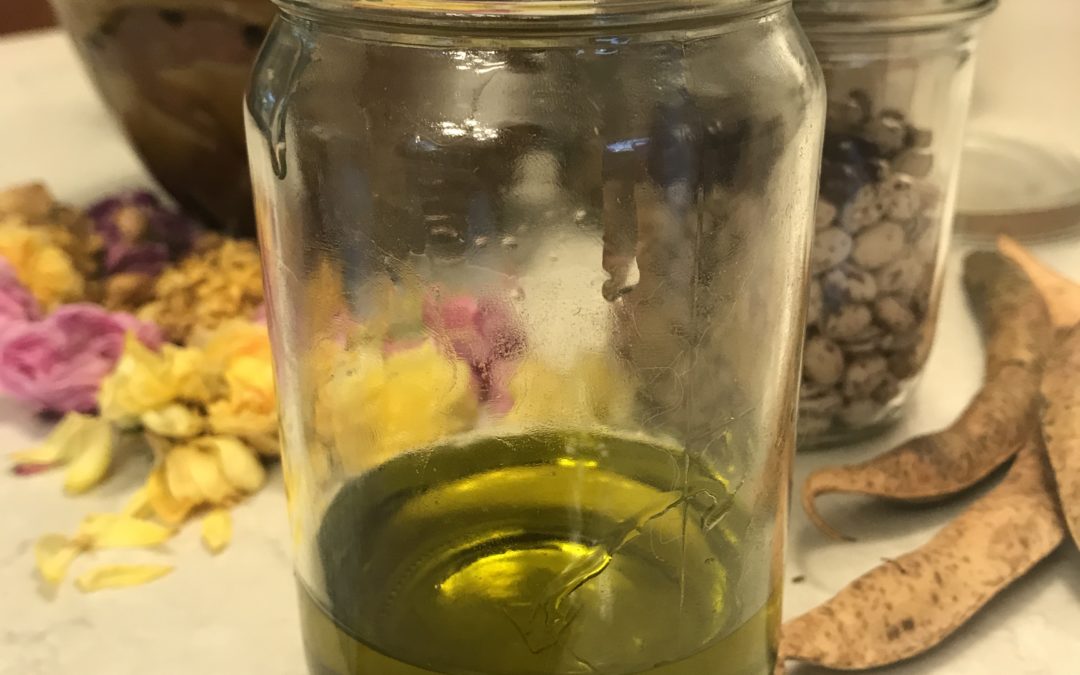
 This was all done out of intuition and instinct. Not my own. (My own instinct was to try to single-handedly save every small bakery on Whidbey during the pandemic by trying to eat all the pastries myself.) No, this is the intuition and instinct of the field, the forest, the herbs, the plants, and all the earthlings we’ve welcomed into our world here. All those who welcome us too.
![Poetry at 50, in the US, as a woman [white], 2021, during a pandemic, in a glorious & painful spring, a flash poem, in four parts](https://www.collectiveself.com/wp-content/uploads/2021/04/IMG_3336-1080x675.jpg)